Searching for a CJdropshipping alternative usually means one of two things: your store grew past what a marketplace platform handles well, or something specific — pricing, support queues, quality control — started costing you money. Both are normal. CJdropshipping earned its place as the upgrade from raw AliExpress dropshipping, and it remains a genuinely good platform for most dropshippers — this comparison won’t pretend otherwise. But different tools fit different stages, and in 2026 the tariff environment has changed what “good sourcing” even means.
First, when you should stay with CJdropshipping
Honest answer: if you’re testing products and doing fewer than about 10 orders a day, CJdropshipping is hard to beat. The catalog is instant, sourcing requests are free, US warehousing exists for popular items, and the integration works. The problems below only start to matter at volume — switching too early adds complexity without payoff.
Sellers typically start looking elsewhere when: per-unit prices carry a visible markup over factory cost, QC becomes inconsistent across batches, support tickets replace a human who knows your store, and branded packaging options stay limited. If two or more of those are costing you money monthly, keep reading.
The alternatives at a glance
| Option | Best for | Pricing model | Weak spot |
|---|---|---|---|
| CJdropshipping | Testing, low volume | Free platform, product markup | Generic QC, support queues at scale |
| Zendrop | Beginners wanting speed | Free + paid tiers | Catalog smaller, costs rise with volume |
| EPROLO | Budget-conscious starters | Free platform, product markup | Slower sourcing on custom requests |
| Spocket | US/EU-supplier positioning | Monthly subscription | Higher unit costs, less China depth |
| AutoDS | Automation across suppliers | Monthly subscription | It’s a tool layer, not a sourcing partner |
| EboxMan (sourcing agent) | 10+ orders/day, proven products | Negotiated per-unit, no markup | Needs volume; no instant catalog |
Zendrop
Zendrop’s strength is onboarding speed: clean interface, US warehouses for its featured products, and automated fulfillment that just works for standard items. It’s arguably the smoothest start in dropshipping. Shipping times on US-warehoused items are among the fastest in the category. The trade-offs appear as you scale — product selection is narrower than CJ’s supplier network, custom sourcing is more limited, and per-order economics favor the platform rather than the seller once volume grows. A strong choice for validating a niche; less strong as the permanent supply chain behind a six-figure-a-year store.
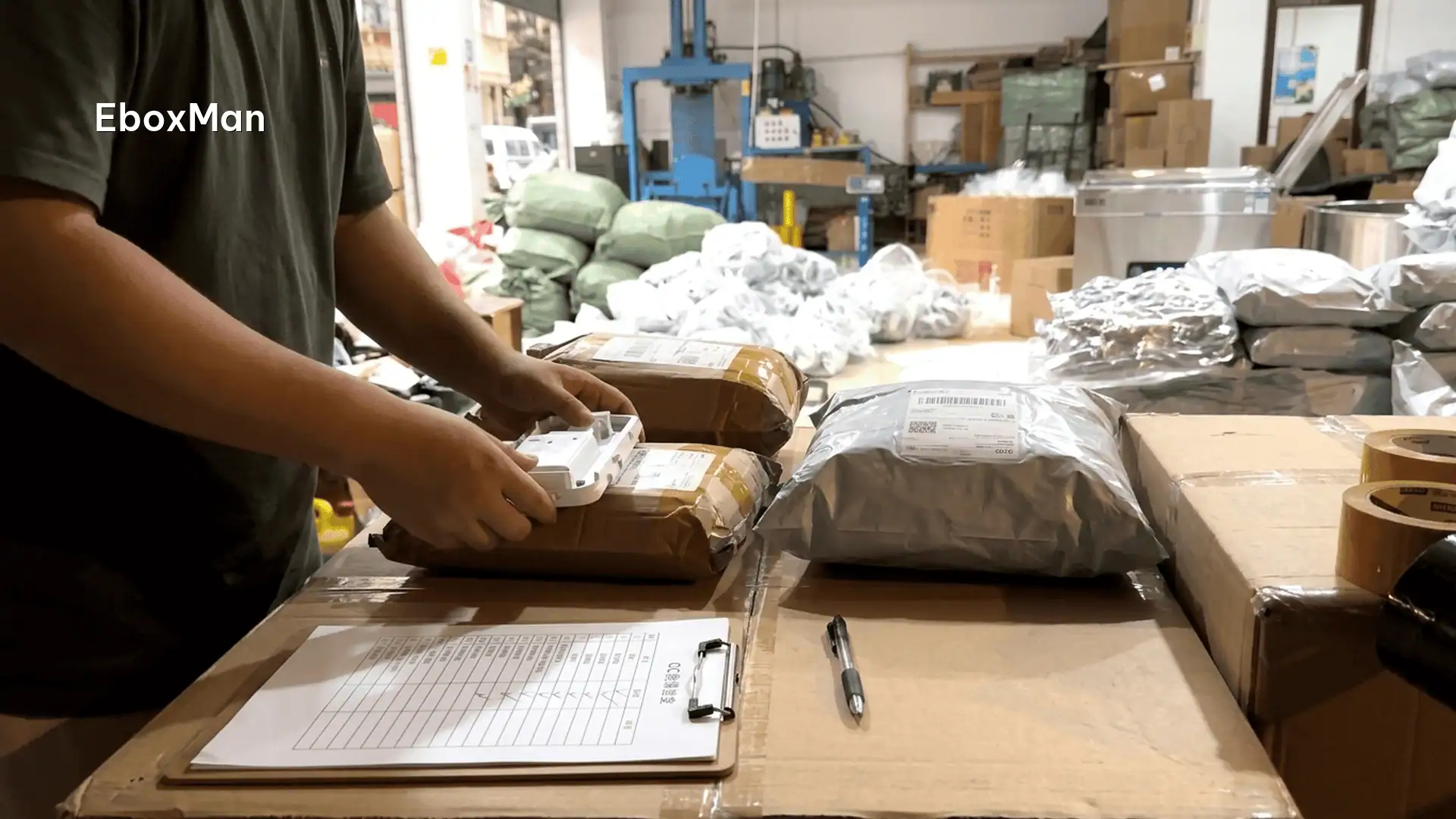
EboxMan — private sourcing agent
EboxMan is a dedicated sourcing agent that works differently from every platform above: instead of picking from a catalog, you bring your proven product and the agent quotes it directly from factories. That structure is why the economics change — no marketplace markup, negotiated pricing at your real volume, batch QC with photo proof before anything ships, and branded packaging as standard rather than an upsell.
EboxMan clients typically ship 30–300 orders a day across US and EU markets. Average unit-cost saving versus CJdropshipping: 10–18% after DDP duties are included — the spread widens further on products over $15 landed cost.
Full disclosure, since this is our own category: an agent is the wrong choice for day-one stores. There’s no instant catalog, quotes take 1–2 business days, and the model only pays off once a product does roughly 10–20 orders a day — the same threshold where platform limitations start costing you. Most of our clients ran CJdropshipping or Zendrop first. That’s the natural order.
EPROLO
EPROLO’s pitch is “free forever,” and it delivers a real free tier with branding options (custom packaging, print-on-demand) earlier than most platforms. Product markup replaces subscription fees. It’s a sensible CJdropshipping alternative if cost control matters more than speed — custom sourcing requests move slower, and peak-season fulfillment times stretch. Same category of tool as CJ, slightly different trade-off curve.
Spocket
Spocket positions around US and EU suppliers, which means faster domestic delivery and a “not from China” story for your brand. That story has a price: unit costs run meaningfully higher, and the depth of customization you get from Chinese factories isn’t there. In 2026 the calculus is more interesting than it used to be — domestic sourcing sidesteps Section 301 duties entirely, so for some product categories the landed-cost gap has narrowed. Run the math per product instead of assuming either way.
AutoDS
AutoDS solves a different problem: it’s an automation layer — product research, listing import, price and stock monitoring, order routing — that sits on top of suppliers rather than replacing them. Dropshippers running many listings across stores get the most out of it. If your bottleneck is operational time rather than supplier quality, it’s the right kind of tool. If your bottleneck is unit cost, QC, or shipping reliability, no automation layer fixes the underlying supply.
Integrations, inventory syncing, and the boring stuff
Every option above integrates with Shopify and WooCommerce; Wix and other carts are covered unevenly (CJdropshipping and AutoDS are broadest, Spocket and Zendrop lean Shopify-first). The operational details matter more than the logos: how listings import, how inventory syncing works, and whether stock levels update fast enough that you never oversell a product the supplier just ran out of. Platforms handle this with app-level sync; a private agent handles it by actually holding your stock — reserved inventory for your store, so overselling stops being a sync problem at all. Whichever route you take, test the unhappy paths before scaling: out-of-stock behavior, refund flow, and what happens to orders placed during a price change.
The 2026 test: who handles your tariffs?
Since the de minimis exemption ended, every parcel from China needs formal customs entry with Section 301 duties plus the 15% Section 122 surcharge. This changed the comparison more than any feature list. Whoever fulfills your orders is now making customs declarations in your supply chain — so ask any platform or agent three questions:
- Is shipping quoted DDP (duties prepaid) or DDU — and if DDP, will they name the shipping line that clears it?
- Which shipping line carries your parcels — and does it clear customs formally?
- Is the quote suspiciously below market? Fake shipping labels and dodged duties are how cut-rate fulfillment hits 30% cheaper — and the seizure risk lands on you, not them.
Any honest provider — including CJdropshipping — can answer these. The ones who can’t are the ones to leave.
EboxMan quotes DDP on every shipment — duties and the applicable surcharge named in the quote before you confirm. No surprises on delivery.
How to decide
Under 10 orders/day: stay on a platform (CJ, Zendrop, or EPROLO by taste; Spocket if faster shipping from domestic warehouses is your pitch). Spend energy on finding a product that works, not optimizing suppliers.
10–20 orders/day on one product: the transition zone. Get a factory-direct quote for your best seller and compare the true landed cost — product, shipping, duties — against your platform price, then compute your break-even ROAS both ways. The spread is usually 10–15%, which at this volume is your entire profit margin.
20+ orders/day: if you’re still on marketplace pricing with generic QC, you’re funding someone else’s margin. Negotiate directly or work with an agent.
If you want the comparison number for your own product, send us the link — a dedicated agent replies with a full landed-cost quote, Section 301 and Section 122 included, within 1–2 business days. Free at any volume, and if your current platform price is already better, we’ll tell you.
EboxMan covers Shopify, WooCommerce, and TikTok Shop — request a sourcing quote on the contact page.
Private Agent for Dropshipping Success