Ten stores list the same silicone phone case from the same factory listing, at nearly the same price. When a customer can find your exact product on a marketplace platform for less, your store has nothing to hold their loyalty except a lower margin.
Private label dropshipping suppliers exist to fix that specific problem: the same reliable factory production, but with your name on the box instead of no name at all, or someone else’s.
Key takeaways
- Unbranded means the factory’s base product; private label just adds your label, box, or insert to that same product.
- Label-only customization usually carries a lower minimum order than mold or tooling changes.
- QC photos before dispatch catch smudged or misapplied labels before they reach a customer’s door.
- Shipping DDP with Section 301 and Section 122 duties included keeps your landed cost predictable regardless of branding.
- Below roughly 10 orders a day, testing with generic catalog products is often the more honest starting point.
Why generic products cap what you can charge
When the product itself is identical across every store selling it, price becomes the only lever left, and someone will always undercut it. Repeat customers remember a brand, not a SKU number.
A product with your name, your box, and your label design attached to it stops competing purely on price. The product itself stops being a brand asset the moment it looks identical to ten other listings.
A product with no name on it is a commodity, and commodities compete on price alone.
What “unbranded” actually means in a China factory catalog
Most factory catalogs list a base SKU: a plain silicone case, a blank skincare jar, an unlabeled supplement bottle. That same mold, formula, or stitching gets sold to dozens of different sellers under dozens of different store names.
Same factory line, different label
Nothing about the physical product changes for private label work. What changes is what wraps around it: a printed sticker, a custom box, an insert card with your brand name and logo.
Where this shows up most: skincare and niche accessories
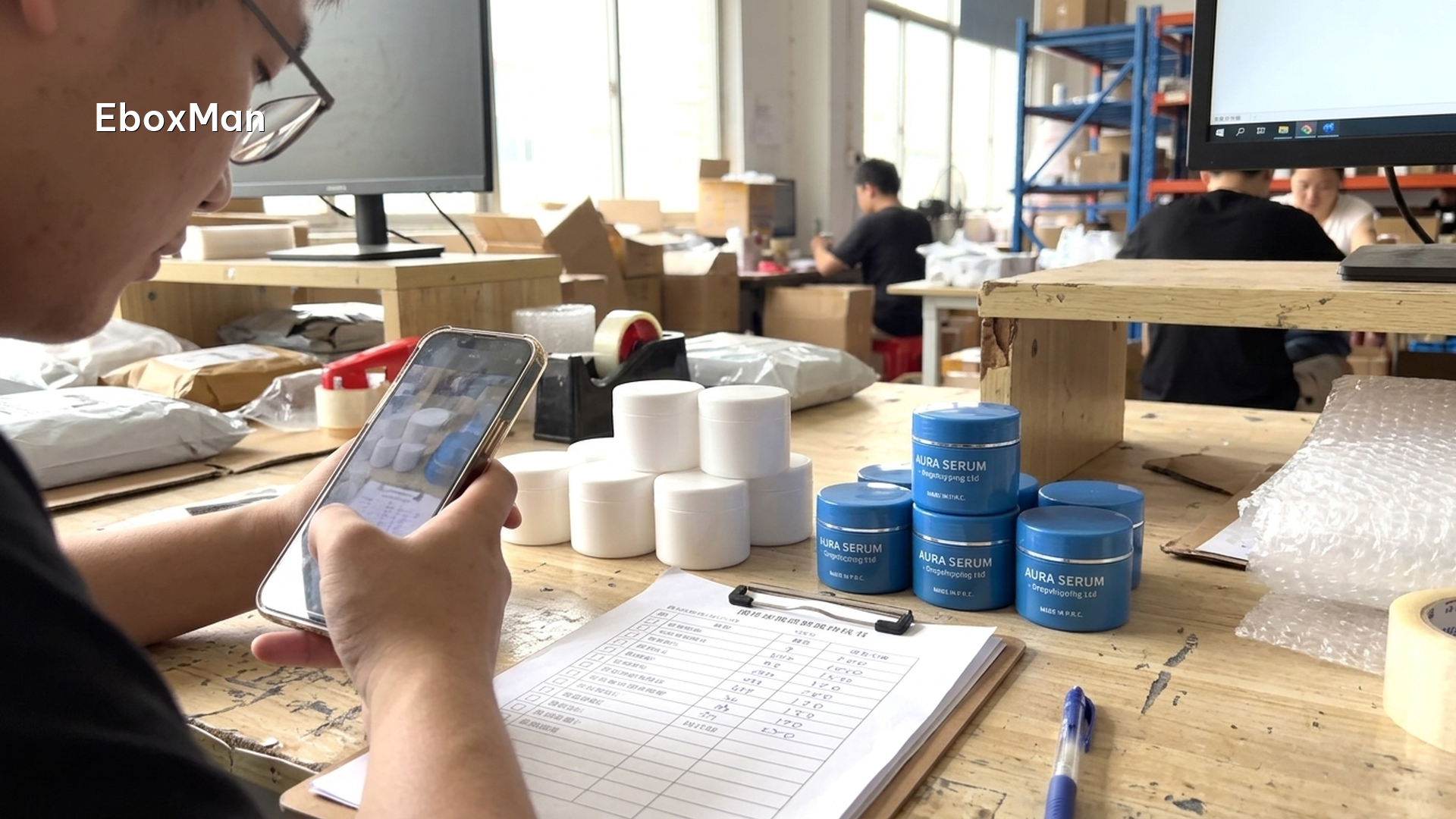
Skincare, supplements, and phone accessories are the categories where private label dropshipping is most common, because the base formula or mold rarely needs to change, only the packaging around it. The factory line stays identical; only the label supplier’s output changes.
Pro tip: send your label design as a vector file (AI, EPS, or high-res PDF), not a screenshot. Blurry logo files are the number one cause of rejected proofs and delayed first runs.
From blank box to branded package: how it actually works
A working sourcing agent, or a supplier who doubles as one, sits between you and the factory floor to manage label proofs, packaging runs, and QC. That coordination is what a dropshipping sourcing agent is built to handle.
Label-only customization
A printed sticker or wrap-around label applied to an existing unbranded product. This is the fastest and cheapest route into private label, often ready within one production cycle.
Custom box and insert customization
A printed outer box, tissue paper, or thank-you card carrying your brand colors and name. This adds unboxing quality without touching the product mold itself.
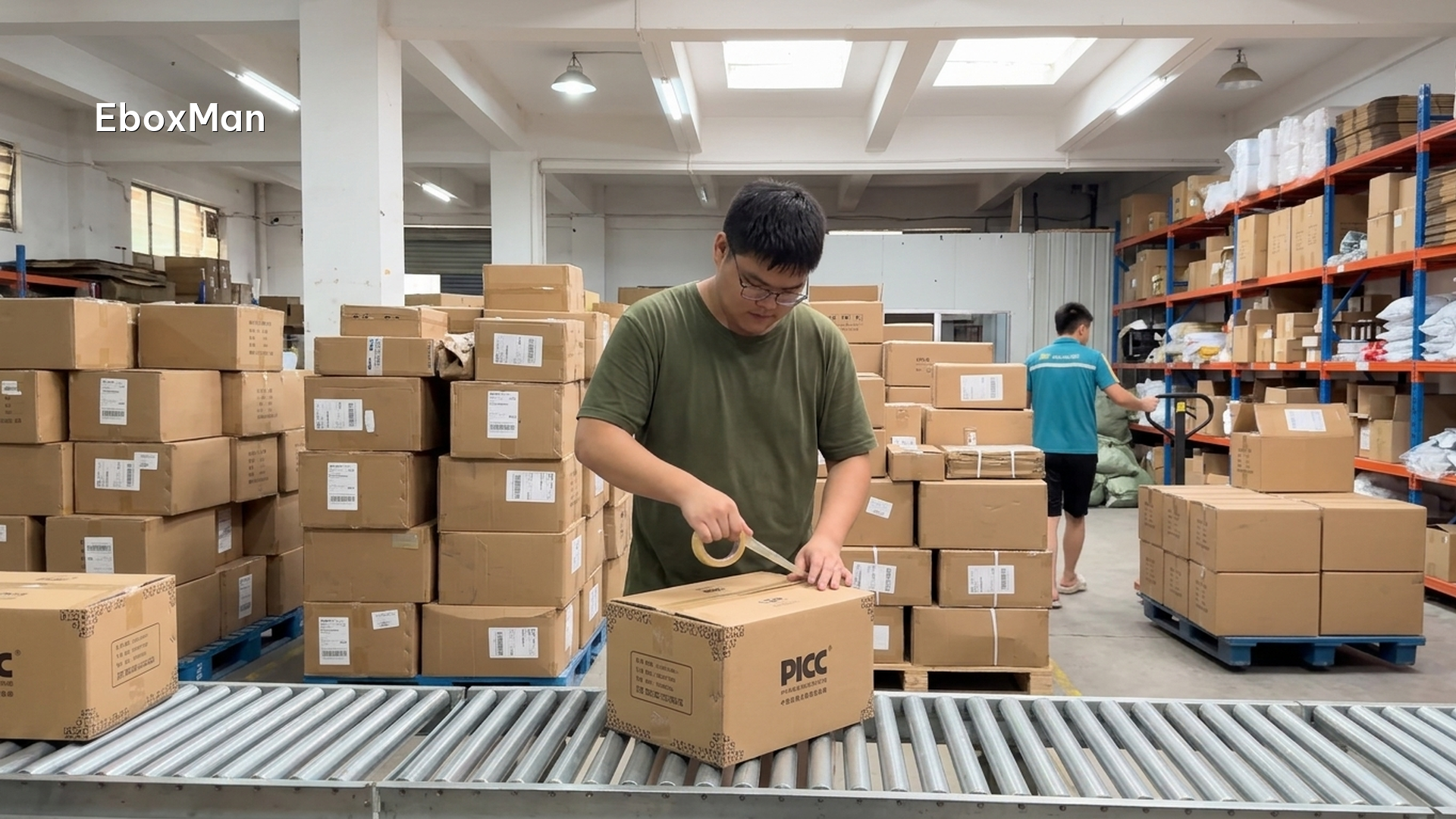
Across the orders we pack every day, the pattern we keep seeing is that sellers underestimate how much a clean label and a matching box change return rates, not just how the product looks. When our QC desk photographs a batch before dispatch, mislabeled or smudged packaging gets caught before it ships, not after a customer opens the box.
Branding a dropshipping business is rarely about the product mold; it is almost always about the label and the box around it.
Minimum order quantities and label design realities
Every private label supplier sets a minimum order because a factory has to run a print job, not a single unit. The number varies by customization type, and no honest supplier quotes a fixed figure without seeing your product and design first.
- Send the base product SKU and your target order volume per month.
- Submit label or box artwork as a print-ready file.
- Approve a physical or digital proof before the full run.
- Confirm packaging QC photos on the first batch before it ships.
- Repeat runs usually move faster once the design file is on record.
Label-only changes carry the lowest minimum order of any customization tier. Mold or tooling changes, by contrast, sit at the far end and take longer to justify at low volume.
Watch out: putting a brand name on a product without checking it is not already trademarked elsewhere can create disputes later. This is a legal question, not a sourcing one, so check with a licensed advisor before you commit to a name.
The real cost math: three routes compared
Sellers often assume private label costs dramatically more than staying unbranded. In practice the label or box print run adds a modest per-unit cost, while the bigger cost variable is still shipping and duties, which apply equally regardless of branding. Understanding your landed cost under Section 301 and Section 122 matters more than the label cost itself.
| Route | Brand control | Typical minimum order | Who it fits |
|---|---|---|---|
| Marketplace/catalog apps | None, product is generic | None, single unit | Testing a niche, under 10 orders/day |
| Shared-warehouse suppliers | Limited, some allow a blank insert | Low, but branding is thin | Scaling stage, 50-500 orders/day |
| Private label supplier | Full: logo, box, insert | Applies, varies by customization tier | Established stores, 500+ orders/day |
If you want the tariff-inclusive number for your exact SKU and packaging tier, send it through our quote form — we reply within 24 hours.
A packaging switch we commonly handle
A recurring pattern: a skincare seller comes in shipping an unbranded jar sourced through several small suppliers, with defect returns running 4-6% and delivery times swinging between 10 and 14 days depending on which supplier shipped that week. Landed cost per unit sat around 3.20 dollars, but it was never predictable batch to batch.
After moving to a single private label supplier with custom box and label, QC-photographed batches brought defect returns down to roughly 1-2%, delivery settled into a consistent 7-9 day window on DDP shipping lines that clear US customs formally, and landed cost stabilized near 3.40-3.60 dollars per unit with duties already included. The unit cost went up slightly; the return rate and delivery variance dropped by more than the cost difference.
The number that moved was not the price per unit, it was how many units came back.
When private label dropshipping is not the right move yet
If your store is under roughly 10 orders a day and you are still testing whether a niche has real demand, paying for a minimum order run before you know the product sells is a real risk. Free catalog apps and marketplace platforms exist for a reason at that stage, and they do that job honestly.
Private label makes sense once volume justifies the minimum order and returns from generic sourcing are already eating into margin. Sample orders with no minimum are the honest way to test a product before committing to a full private label run, and every stage of that decision benefits from working with a fulfillment center that ships product directly to your customer without you holding inventory.
Frequently asked questions
What is the difference between private label and white label dropshipping?
White label typically means the same product and packaging design shared across many sellers with only a name swapped on a template. Private label means the packaging, label design, and sometimes the box are built specifically for your brand.
Do I need a trademark before putting my brand name on a product?
A trademark is not required to launch, but selling under a name that is already trademarked elsewhere can create disputes later. This is a legal question a licensed customs broker or trademark attorney should answer, not a sourcing question.
How much longer does custom packaging add to production?
Label-only customization adds the least time, since it applies to an already-produced base product. Custom box printing and mold changes take longer because they require their own separate production run.
Can I start unbranded and add private label later?
Yes. Most sellers test with an unbranded sample order first, confirm the product sells, then move the same SKU into a private label run once volume justifies the minimum order.
Private label dropshipping is not complicated once you separate the product from the packaging around it: the factory line rarely changes, the label and box do. If you want to see what a private label run on your product would land at with duties included, our team replies within 24 hours with the real number.
Private Agent for Dropshipping Success