
Packaging that survives a quiet September often fails in November. Between Black Friday and Cyber Monday, parcel volume at carrier hubs climbs, sort lines run faster, and every box gets stacked, dropped, and re-sorted more often than at any other time of year.
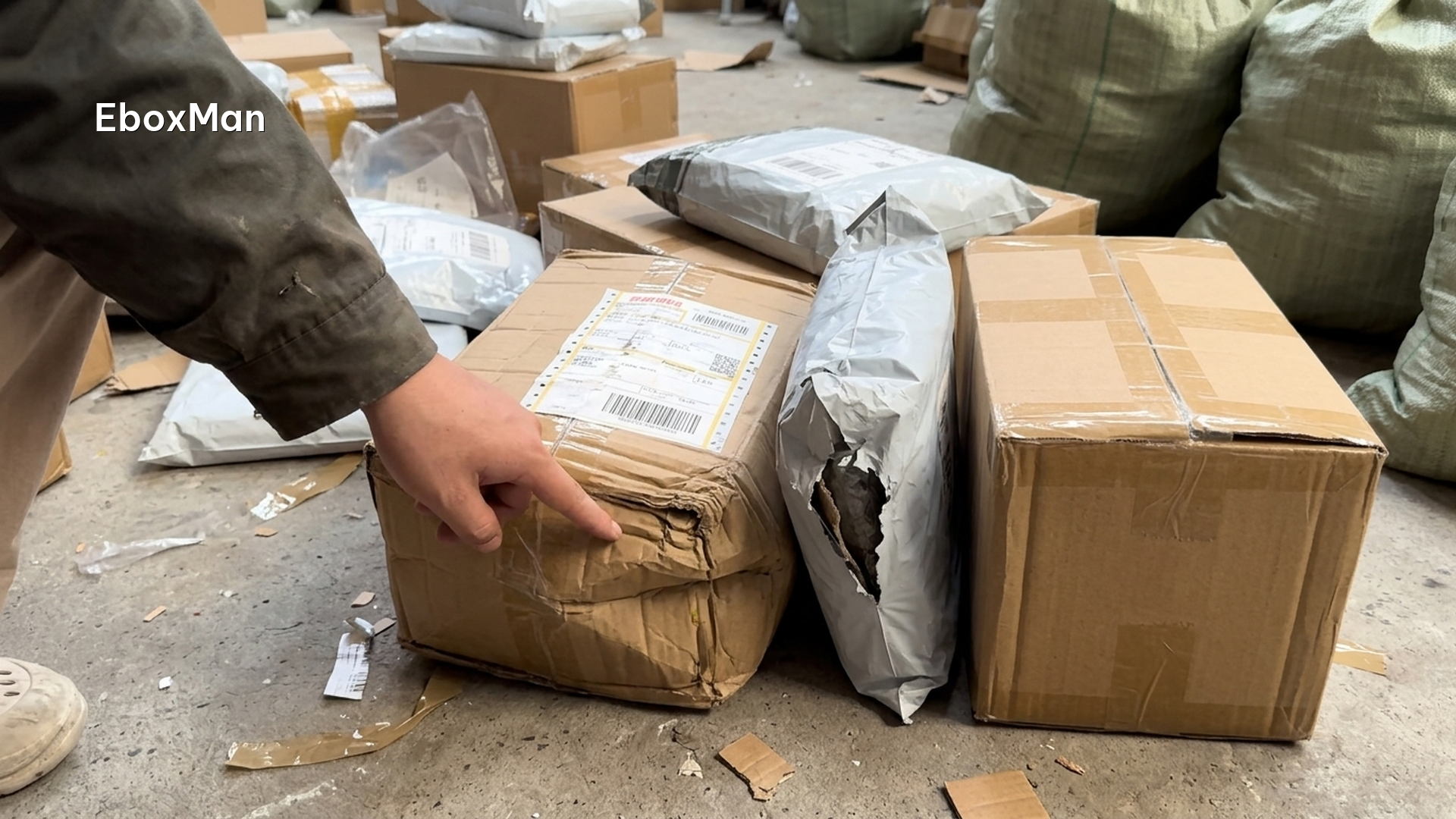
The result shows up in your support inbox as “arrived crushed” tickets, right when ad spend is highest. Here’s how to spec ecommerce packaging for peak season, what it costs per order, and when it pays for itself. For any e-commerce brand, it is one of the cheaper ways to protect customer satisfaction during the busiest weeks of the year.
Key takeaways
- Most peak-season damage traces to empty space inside the carton, not a weak outer box.
- A 1-meter drop test on every face, edge, and corner catches most failures for the price of one sample.
- In our worked example, a $0.45 packaging upgrade cut total damage cost per order from $1.12 to $0.80.
- Lock your packed spec by early September: China-origin orders need 2-3 days of processing plus 6-12 days of shipping.
Why Q4 handling is harder than the rest of the year
Carrier logistics run closest to capacity during the holiday season. Parcels spend more time in cages stacked several layers high, travel through more automated sort lines, and are handled by temporary staff who are moving fast. Warehouse fulfillment teams feel the same pressure, and packing shortcuts creep in whenever pick-and-pack lines speed up.
Peak season doesn’t change what a box can take. It changes how many times it has to take it.
A carton rated for a normal route may see double the handling events in the busiest weeks. Small weaknesses that never mattered in September, like a loose-fitting insert or a flimsy flap, become visible damage in November.
The three failures we see most
Across the orders we pack every day, the pattern we keep seeing is that damage clusters into a few repeatable causes. Fixing these three covers most of the problem.
Compression in stacked cages
Heavy parcels get loaded on top of light ones. Single-wall cartons with a low edge crush rating buckle at the corners, and anything rigid inside punches through.
Drops on conveyors and chutes
Products that can shift inside the box hit the walls on every drop. The outer carton survives while the product inside cracks.
Moisture and torn labels
Cold, wet loading docks weaken uncoated cardboard and lift cheap tape. A label that peels in transit turns a delivery into a tracking-dark parcel, which is a customer experience problem even when the goods are intact.
Watch out: Poly mailers are fine for soft goods, but any product with a rigid corner, a glass part, or a boxed retail pack inside needs a carton. Mailers fail at exactly the points where sort machinery grips.
Packaging specs that hold up, by product type
Start with the product, not the box catalog. These are practical starting points to confirm with your supplier and test yourself, so you can optimize each SKU instead of forcing one box size onto everything.
- Fragile and rigid items (ceramics, glass, electronics): double-wall corrugated carton, about 2 cm of cushioning on every side, and an inner wrap so the item can’t touch the wall.
- Soft goods (apparel, textiles): a tear-resistant poly mailer is usually enough, with a sealed inner bag against moisture.
- Liquids and cosmetics: sealed primary container, a second sealed bag, absorbent layer, and a carton with no movement.
- Multi-unit orders: separate each unit with a divider so they can’t grind together.
If you can hear the product move when you shake the sealed carton, it will break somewhere between the warehouse and your customer.
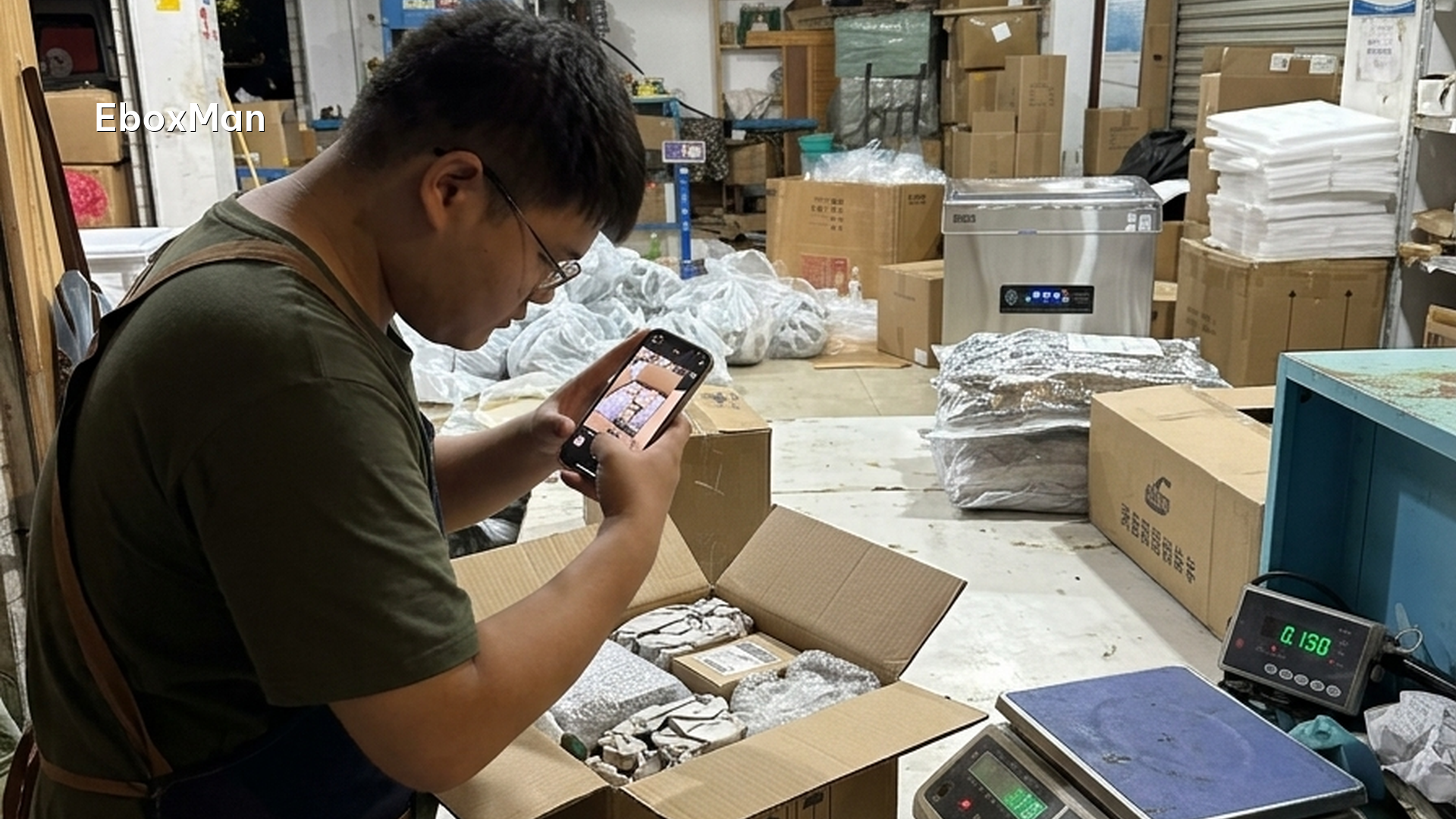
When our QC desk photographs a batch before dispatch, the thing that shows up most is empty space inside an otherwise strong carton. Adding a paper fill or a fitted insert costs far less than upgrading the outer box.
Pro tip: Run a simple drop test before you commit. Drop a fully packed, sealed sample from 1 meter onto each face, edge, and corner, then open it and check. It’s a lightweight version of standard ISTA-style testing, and it takes ten minutes.
Does stronger packaging pay for itself?
The usual objection is margin: better packaging adds cost to every order, including the ones that would have arrived fine. Fair, so here’s the math on a hypothetical $30 product with a $9 unit cost and $5 shipping. Each damaged order means a reship at roughly $14, before counting refunds or lost repeat purchases.
| Setup | Damage rate | Reship cost per order | Packaging add | Total per order |
|---|---|---|---|---|
| Standard mailer or thin carton | 8% | $1.12 | $0.00 | $1.12 |
| Double-wall carton plus insert | 2.5% | $0.35 | $0.45 | $0.80 |
The upgrade saves about $0.32 per order before counting support time, review damage, or customer satisfaction. Your numbers will differ, so replace the damage rate and unit cost with your own. The simplest way to optimize packaging spend is to compare total cost per order rather than the price of the carton alone.
A packaging upgrade pays for itself when it removes one damaged order in every twenty.
Volume, weight, and landed cost
Bigger cartons add freight. Many international carriers bill the greater of actual weight or volume in cm³ divided by 5,000, so a 30 × 20 × 10 cm box bills as 1.2 kg even if it weighs less. That’s why you should always calculate landed cost on the final packed spec, including Section 301 (25% on most goods, 7.5% on List 4A) and the 15% Section 122 surcharge.
With the de minimis exemption gone, every China-to-US parcel needs formal customs entry. We ship DDP on shipping lines that clear US customs formally, so duties are paid before delivery, included in your per-unit price, with no bill at the customer’s door.
If you want the tariff-inclusive number for your exact SKU in its upgraded packaging, send it through our quote form and we’ll reply within 24 hours.
A typical before-and-after
A common situation: a home-goods seller shipping small ceramic items in thin cartons sees 6-9% damage claims during the Q4 promotion window. After moving to double-wall cartons with fitted paper inserts, adding roughly $0.35-0.60 per unit, claims typically fall to 2-3%. Delivery times don’t change, and the seller’s support queue gets noticeably shorter.
Pre-peak packaging checklist
Good supply chain planning means decisions made weeks before the rush. Work through this list while your supplier still has capacity.
- Order a fully packed sample of each top SKU and drop-test it from 1 meter.
- Photograph the opened carton and check for void space and product movement.
- Confirm the carton’s edge crush rating or wall construction with your supplier.
- Use water-resistant tape and a label placed on a flat surface, never over a seam.
- Forecast Q4 volume per SKU and place inventory and packaging orders early; custom packaging has an MOQ and lead time.
- Ask for real-time tracking on every parcel, so a stalled box gets caught before the customer writes in.
The cheapest time to find a packaging flaw is on your desk in September, not in a customer’s photo in December.
If your goods pass through a fulfillment center or an agent’s warehouse, ask for the same photo proof of the packed carton. Good inventory management includes knowing how each unit is actually packed, not just that it shipped.
When this does not apply
If you sell low-value, unbreakable items like basic apparel or fabric accessories, a sturdy poly mailer is probably the right call, and extra cushioning only adds freight cost. If you ship under roughly 10 orders a day, marketplace platforms and shared-warehouse suppliers can be simpler, since their standard packing is built for that volume.
Custom branded packaging is worth it once your volume justifies the MOQ. Until then, plain, well-fitted packaging beats a printed box that rattles.
Frequently asked questions
When should I finalize packaging for peak season?
Aim for early September. Orders from China need 2-3 days of processing and 6-12 days of shipping, and suppliers get busy as Black Friday and Cyber Monday approach.
Is double-wall cardboard always necessary?
No. It matters for fragile, heavy, or rigid products. For light, soft goods a single-wall carton or tear-resistant mailer is usually enough.
Will heavier packaging raise my duties?
It can raise freight through weight or volume billing, so check landed cost on the final packed spec. Section 301 and Section 122 rates depend on the product’s classification, which you can look up yourself in the HTS database. For edge cases, ask a licensed customs broker.
What happens if a parcel still arrives damaged?
With EboxMan, lost or damaged orders are covered by a reship or refund under our public reshipment and refund policy. Photo and video QC before shipping also helps catch packing problems before they leave the warehouse.
Peak season rewards sellers who test packaging early and do the per-order math. If you’d like a tariff-inclusive price on your product in its peak-season packaging, request a free sourcing quote and we’ll reply within 24 hours.
Private Agent for Dropshipping Success