
Ad budget is the one Black Friday cost you can’t take back. If a shopper clicks on November 27 and the parcel lands in mid-January, you’ve paid for the click, the discount, the refund, and probably the chargeback.
This black friday ecommerce checklist is built on one rule: prove fulfillment works, then turn the ads on. It covers the BFCM 2026 timeline, the landed-cost math, and the storefront checks that protect your conversion rate.
Key takeaways
- Black Friday is November 27, 2026 and Cyber Monday is November 30; at 2-3 days processing plus 6-12 days shipping, an order needs roughly 8-15 days to reach the door.
- Run a real test order by mid-October; a supplier’s promised lead time isn’t a test.
- Section 301 (25% on most goods) plus Section 122 (15%) adds about $4.00 on a $10 customs value, so set discount depth after landed cost, not before.
- On $10,000 of ad spend, a 12% refund rate instead of 4% costs about $1,200 before reship costs.
- Write pause rules for your ads before launch day, not during it.
Why ads should wait for fulfillment
Ads scale instantly; fulfillment doesn’t. You can triple spend in an afternoon, but a supplier that struggles at 80 orders a day won’t handle 300 by Saturday.
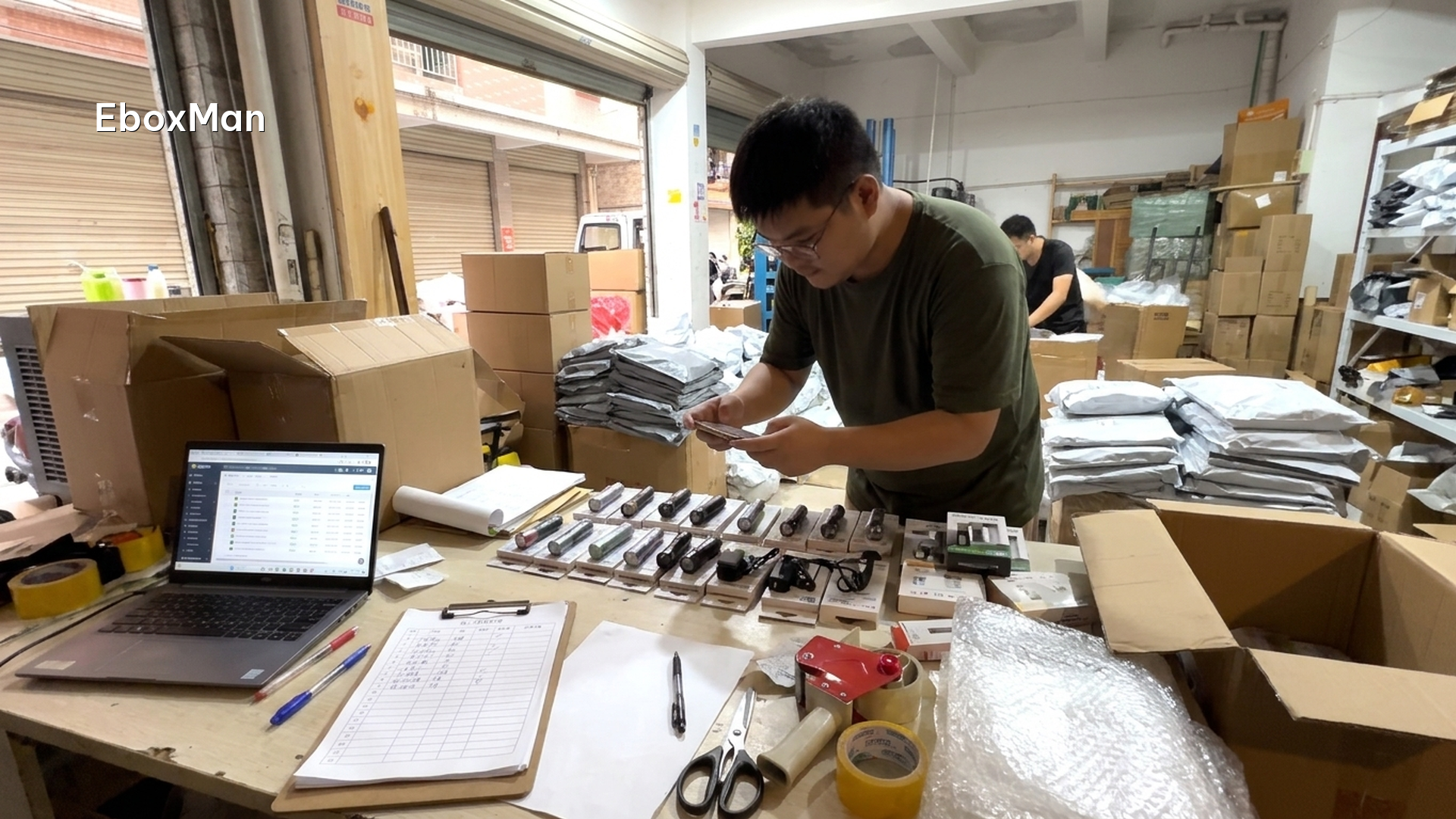
Across the orders we pack every day, the pattern we keep seeing is that peak-week failures are rarely dramatic. They’re small: a SKU out of stock in one color, a batch with a 7% defect rate, a tracking number that doesn’t update for six days. Each one is cheap to fix in October and expensive to fix in the middle of a sale.
Every fulfillment problem you find in October costs a message; every one you find on Black Friday costs a refund.
The 2026 timeline: work backward from Cyber Monday
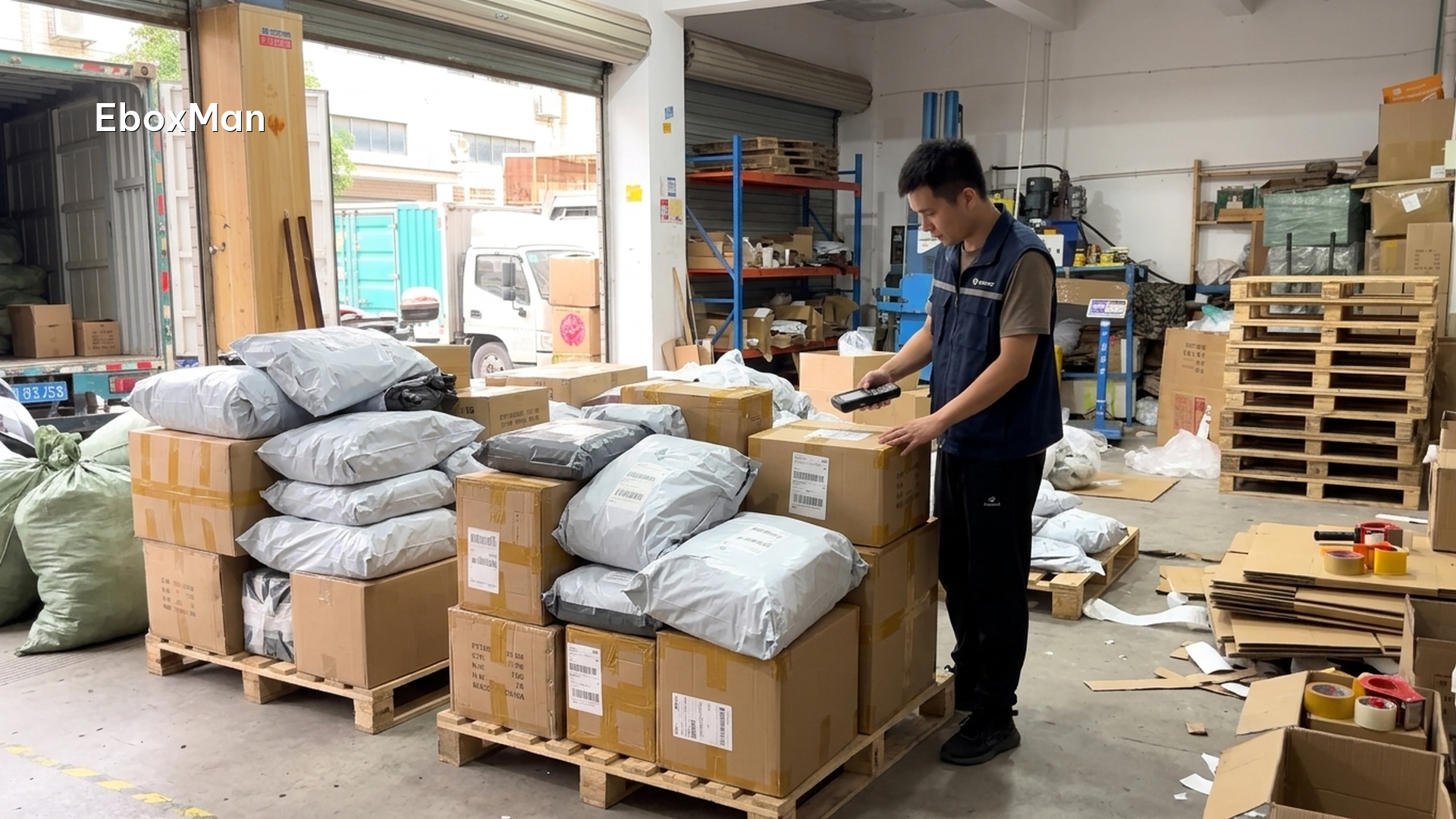
Start from the date your shopper expects the parcel, then subtract. For our lanes, processing takes 2-3 days after payment and shipping runs 6-12 days door-to-door, with the US averaging about 8. An order placed on Black Friday therefore arrives around December 5-12, and a Cyber Monday order around December 8-15.
Peak season adds carrier congestion and factory queues, so build a buffer of 3-5 days into any promise you print on the product page. If your holiday cutoff is already tight, say so plainly rather than hoping.
Watch out: Cheap routes that skip formal customs clearance often look fine in October and go tracking-dark in peak weeks. Read the risks of fake shipping labels before you pick a lane on price alone.
Your delivery promise is the lead time plus a buffer, not the lead time you hope for.
The black friday ecommerce checklist: 10 pre-flight checks
Work through these in order. If any item is red, cap or hold ad spend until it’s green.
- Place a real test order by mid-October. Ship it to your own address and record processing days, transit days, and tracking updates.
- Check the QC evidence. When our QC desk photographs a batch before dispatch, we’re looking for what a shopper would complain about: color, stitching, missing parts. Ask your supplier for the same photos or video.
- Confirm stock per SKU and variant, including every component in a bundle.
- Calculate landed cost per unit, including duties (next section).
- Set a discount floor from margin after landed cost, payment fees, and cost per acquisition.
- Decide who pays duties. Under DDP versus DDU, DDU can mean a customs bill at the door, which means a refused parcel.
- Print an honest delivery window on the product page, cart, and checkout.
- Audit the checkout process on mobile: payment methods, shipping rates, discount code field, and cart abandonment emails.
- Publish your return policy and prepare support replies for “where is my order.”
- Write ad kill-switch rules, such as pausing a product when stock drops below five days of sales or when tracking exceptions pass a set percentage.
Pro tip: Give existing customers early access 24-48 hours before you go live. It’s a low-volume fulfillment rehearsal, and your warmest shoppers convert at the best rate.
Landed cost decides how deep your discount can go
Black friday sales are priced from landed cost, and since the de minimis exemption ended, every China-to-US parcel needs formal entry. Most goods carry Section 301 at 25% (7.5% on List 4A items) and a Section 122 surcharge of 15%. On a $10 customs value that’s $2.50 plus $1.50, or about $4.00 per unit, before freight.
Look up your own HTS code in the USITC tariff database, check which measures apply to it, and verify the status of any IEEPA-based duties on the day you price. Our landed cost guide walks through the arithmetic. For edge cases, ask a licensed customs broker.
If you want the tariff-inclusive number for your exact SKU, send it through our quote form and we’ll reply within 24 hours.
A 30% discount on a product whose duties you haven’t priced is a bet, not a promotion.
What a fulfillment failure costs on real ad spend
An illustrative example
Take $10,000 of BFCM ad spend at a $40 cost per new customer and a $60 average order value. The only variable below is the share of orders refunded or reshipped. Your figures will differ, but the shape holds.
| Line item | Fulfillment ready | Not ready | Gap |
|---|---|---|---|
| Orders from $10,000 ad spend | 250 | 250 | 0 |
| Revenue at $60 per order | $15,000 | $15,000 | $0 |
| Refunded or reshipped orders | 10 (4%) | 30 (12%) | 20 orders |
| Revenue refunded | $600 | $1,800 | $1,200 |
| Revenue kept | $14,400 | $13,200 | $1,200 |
The $1,200 gap excludes reship freight, support hours, and the repeat purchase you won’t get. A 4-point drop in refund rate on a $60 order is worth $2.40 per order sold, so any per-unit agent premium below that pays for itself on refunds alone.
A seller story we see often
A seller doing 60-80 orders a day planned for roughly 3-4 times that volume. Their test order took 16 days, and defect-related returns ran 6-9%. After moving to pre-dispatch photo QC and a DDP line with formal clearance, door-to-door time settled at 8-12 days, defect returns fell to about 2-4%, and the customer no longer got a bill at the door.
When this advice does not apply
Under about 10 orders a day, marketplace platforms and free catalog apps are often the better fit: they’re fast to start and need no sourcing work. Shared-warehouse suppliers can also win when you need US-based stock for two-day delivery. A dedicated agent earns its place once volume, QC, and duty exposure start to matter.
Refunds are the hidden line in every Black Friday budget, and they scale faster than revenue when fulfillment is shaky.
Storefront checks that protect your conversion rate
Once supply is solid, tune the ecommerce store itself. A bundle can lift average order value, but only if every component is in stock and ships together. Test the cart with a discount code on a phone, since a broken code field turns a ready shopper into cart abandonment.
State the delivery window and return policy where the shopper decides, in the cart and at checkout, not only in the footer. Honest dates protect the customer experience more than a fast promise you can’t keep. If your fulfillment partner runs a fulfillment center model, confirm its peak-week cutoffs in writing.
Honest delivery dates convert slightly worse on Friday and far better in your review count in January.
Frequently asked questions
When should I stop ordering stock for Black Friday 2026?
Count back from your last promised delivery date using 2-3 days processing plus 6-12 days shipping, then add a 3-5 day buffer. For most sellers, that makes mid-October the practical deadline for test orders and early November for final restocks.
Should I pause ads if my supplier runs late?
Pause or cap spend on the affected product, not the whole account. Selling inventory that can’t ship on time converts ad budget into refunds and chargebacks.
How do I price discounts with Section 301 and Section 122 in mind?
Find your HTS code, check which duties apply, and add them to product cost and freight to get landed cost. Set your discount floor above that number plus fees and acquisition cost, and confirm any IEEPA-based duties on the day you price.
Is a test order really necessary if my supplier quotes lead times?
Yes. A quote tells you what’s intended; a test order tells you what happens, including packaging quality, tracking behavior, and how fast support replies.
If you’d like a second set of eyes before you commit budget, send us your top SKUs and we’ll quote one tariff-inclusive price, replying within 24 hours. Sample orders are supported with no minimum, which makes October a good time to run the test.
Private Agent for Dropshipping Success