
Most sellers choose a fulfillment partner from a rate sheet and a handful of reviews, then learn how it performs when 400 orders land in one weekend. By then there’s no time to switch, and every late or damaged parcel becomes a refund, a chargeback, or a one-star review.
A small test order fixes that. For roughly the cost of one day of ad testing, you see the whole workflow (processing, packing, carrier handoff, tracking, delivery) before the stakes are high.
Key takeaways
- 10-20 units across 2-3 SKUs is enough to expose most fulfillment problems.
- Start 6-8 weeks before peak: 2-3 days processing plus 6-12 days transit leaves room to switch if the test fails.
- Track six numbers: processing days, first carrier scan, delivery days, defect rate, tracking accuracy, and support reply time.
- The price you were quoted should equal the final cost, with no duty bill landing on your customer.
- Under about 10 orders a day, marketplace platforms are often the simpler choice.
Why peak season is the wrong time to find out
Peak doesn’t create fulfillment problems. It exposes the ones that were already there. A warehouse running a manual workflow can look fine at 50 orders a day, then watch its pick queue stretch from 2 days to 6 days when volume triples.
Peak season doesn’t create fulfillment problems; it exposes the ones already there.
Shared-warehouse suppliers and marketplace platforms have real strengths: big catalogs, fast onboarding, and no sourcing conversation. The trade-off is a shared queue, so your parcel waits behind everyone else’s. Whether you’re evaluating a 3pl, a fulfillment center, or an agent, you want to see that queue behave before November.
Across the orders we pack every day, the pattern we keep seeing is simple. Sellers who test early fix problems in week one, and sellers who don’t hear about them from customers in week six.
How to design a test order that tells you something
Pick SKUs that can fail
Don’t test only your easiest product. Include your best seller, your most fragile item, and one variant-heavy SKU (sizes or colors) where mix-ups happen. If you sell bundles, add one order that needs kitting, because multi-item packing is where many workflows slip.
Run your real workflow, not a shortcut
Place the orders through your actual store integration instead of emailing a spreadsheet. That tests product sync, inventory management, and whether order status updates arrive in real-time or a day late. A partner whose management system can’t keep up with 5 orders will struggle with 500.
The test checklist
- Place 3-5 orders through your live Shopify or WooCommerce integration.
- Include one multi-item order or kitting bundle.
- Log timestamps: payment, shipped, first carrier scan, delivered.
- Ship to your own address plus one in a different region.
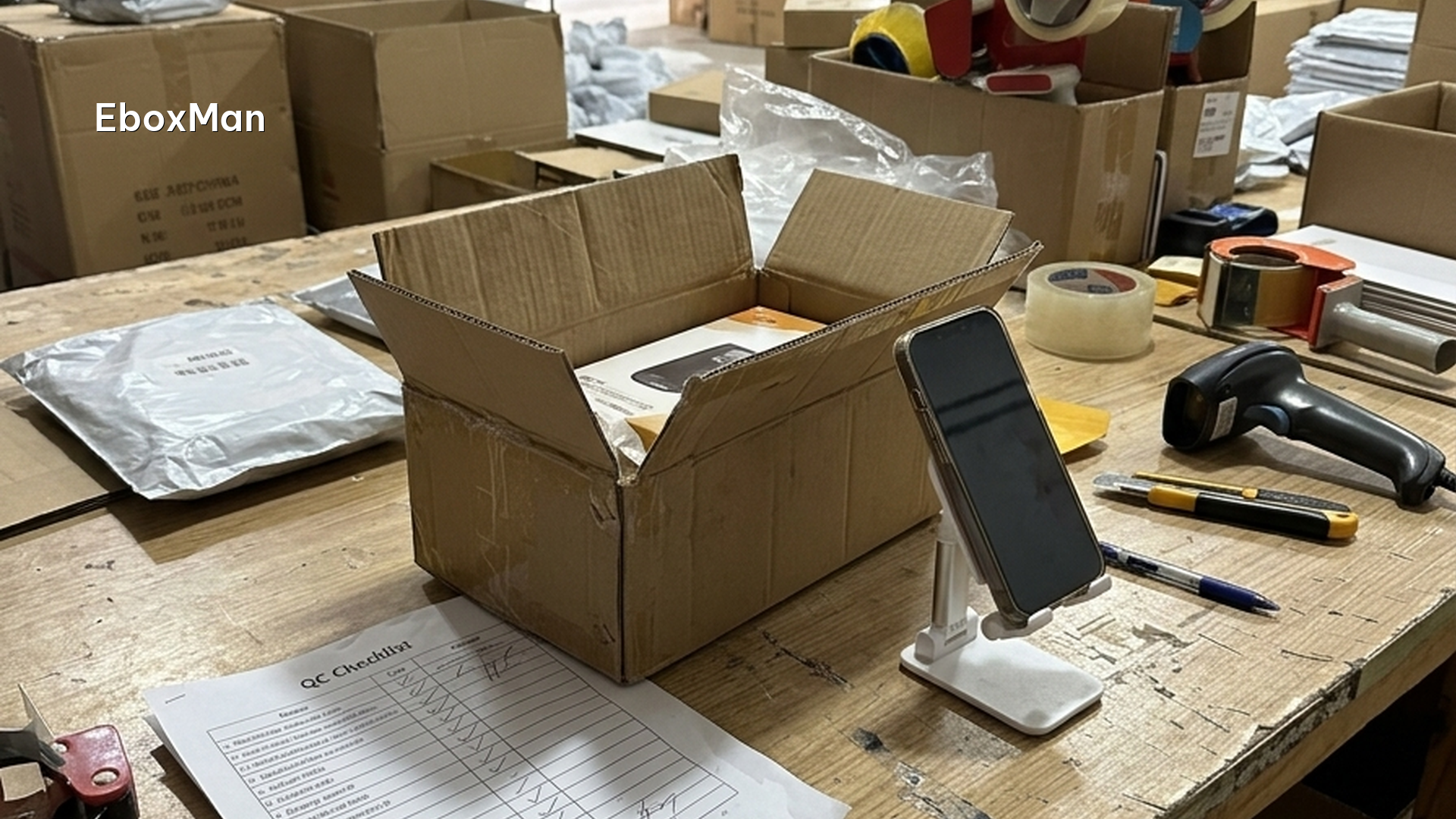
- Open every box on arrival and photograph any defect.
- Contact support twice, once outside business hours.
- Compare the final cost to the quote you were given.
Pro tip: Run a second, smaller test two weeks after the first. One good run can be luck, and consistency is what you’re really buying.
The scorecard: six numbers to record
Gut feeling isn’t a test result. Write the numbers down, and judge them against ranges that fit your lane. These are rules of thumb for small China-to-US parcels.
| Metric | How to measure | Healthy range | Red flag |
|---|---|---|---|
| Processing time | Payment to shipped | 2-3 days | Over 5 days |
| Transit time | Shipped to delivered | 6-12 days | Over 15 days |
| Defect rate | Faulty units / units sent | Under 3% | Over 5% |
| Tracking | Scans vs. reality | First scan within 48 hours | Dark for 5+ days |
| Support reply | Message to useful answer | Same day | 2+ days |
| Final cost | Invoice vs. quote | Equal | Surprise fees |
Six recorded numbers will tell you more about a partner than any sales deck.
Also check what happened before the box was sealed. When our QC desk photographs a batch before dispatch, the catches are usually small: a wrong color variant, loose stitching, a cracked lid. Ask whether your candidate partner does photo or video QC at all, and whether the carrier label is real, with full tracking. YunExpress and Yanwen, for example, give genuine tracking through to delivery.
What the test costs versus what skipping it costs
The usual objection is that samples cost more per unit and delay the launch. Run the math with illustrative numbers: 15 test units at a landed cost of $14 is about $210, plus a two-week wait.
Now take a peak run of 400 orders at a $35 average order value. If 8% go wrong (late, damaged, or wrong variant) and each costs about $41 in refund plus reshipment, that’s 32 orders and roughly $1,300, before chargebacks and wasted ad spend. Even at 3% it’s around $490, so the test pays for itself if it prevents one bad batch.
A $210 test is cheap insurance against a $1,300 mistake made at peak volume.
If you want the tariff-inclusive number for your exact SKU before you place a test order, send it through our quote form and we reply within 24 hours.
A pattern we see often
A Shopify seller doing 30-40 orders a day ran a 12-unit test across three SKUs with their previous supplier. Two boxes arrived damaged, and delivery took 16 days. Their live numbers matched: 6-9% of orders drew a complaint, and delivery ran 14-20 days.
After moving to factory-direct sourcing with pre-dispatch QC photos, they typically land in a different range: 1-3% complaints, 7-10 days delivery, and one all-in price of $11-13 per unit instead of $13-15 with surprises. Those are typical ranges from operations like theirs, not a promise.
Use the test to check the duty math
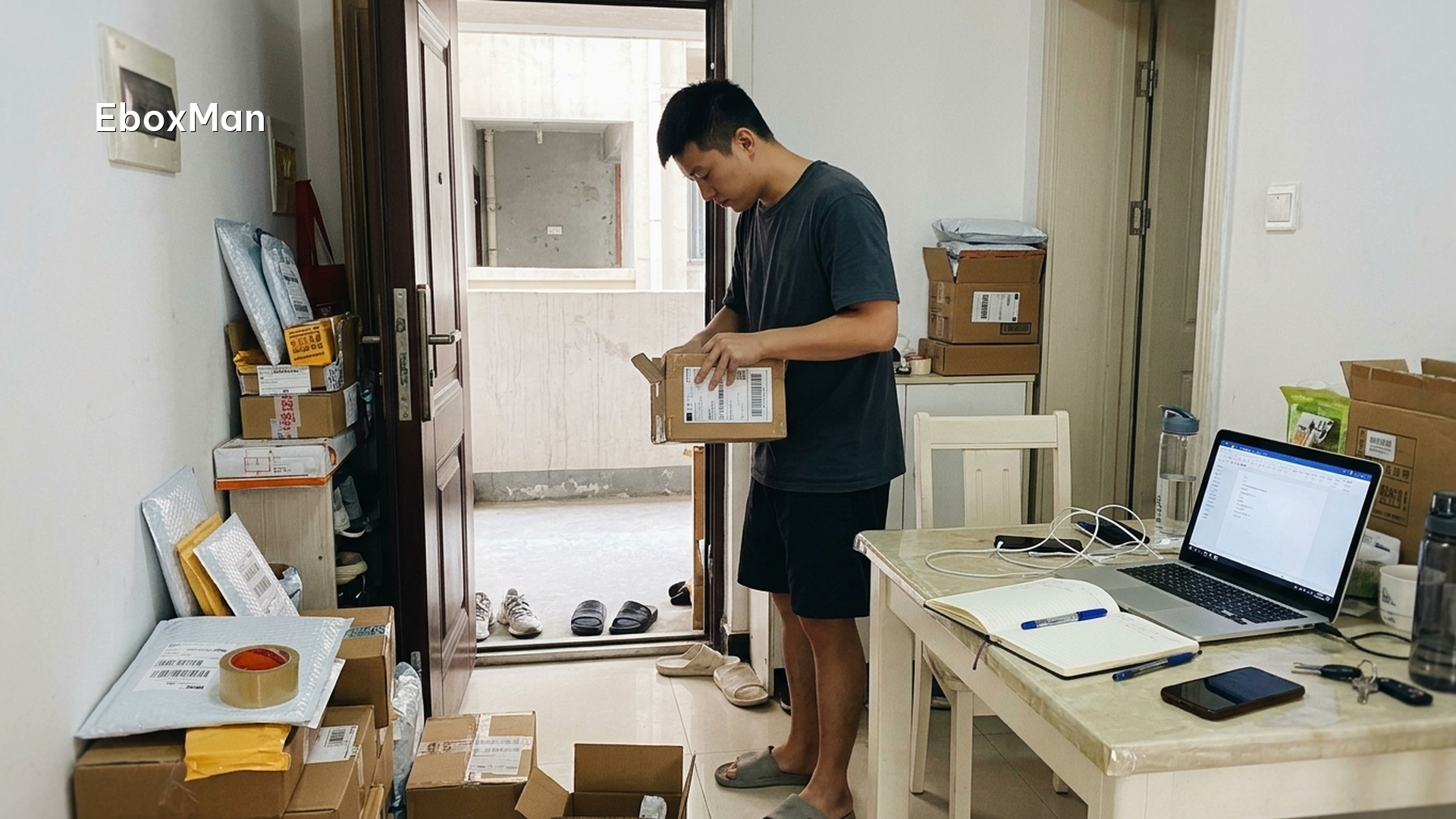
The de minimis $800 exemption is gone, so every China-to-US parcel needs formal customs entry. For most goods, Section 301 adds 25% (7.5% on List 4A items), and the Section 122 surcharge adds 15%. You can look up your own HTS code in the official USITC search and do the math yourself.
The test shows who actually pays. Under DDP, duties are settled before delivery, and under DDU your customer may get a bill at the door. Our shipments go DDP on shipping lines that clear US customs formally, with duties included in your per-unit price and nothing added at delivery.
Watch out: If a test parcel arrives with a duty or brokerage charge, your customer would have paid it too. For edge cases involving Section 301, Section 122, or IEEPA classification, ask a licensed customs broker.
When a test order is not the right move
Under roughly 10 orders a day, marketplace platforms are often better. Onboarding is faster, catalogs are broad, and you don’t need a sourcing relationship yet. A sample is simply the cheapest way in when you’re ready to move beyond that.
A test also can’t reproduce peak volume. Ask about capacity, staff scheduling, and order cut-offs, and ask how the supply chain behaves when volume triples. We handle 10,000+ orders a day, but you should ask every candidate the same question and expect a specific answer.
Choosing the right partner is mostly about removing surprises. We’ve been doing this since 2019, and sample orders are supported with no minimum, no monthly fee, and no contract, so you can evaluate us the same way you’d evaluate anyone else.
Frequently asked questions
How big should a sample order be?
Aim for 10-20 units across 2-3 SKUs, including one fragile item and one multi-item order. That’s enough to see defects, packing quality, and tracking behavior without a large spend.
How far ahead of peak should I test?
Start 6-8 weeks before your peak begins. Processing takes 2-3 days and transit 6-12 days, so one full test plus a repeat run takes about three weeks and still leaves time to switch partners.
Does a test order show how a partner handles peak volume?
Not directly. It shows process quality, communication, and accuracy. For volume, ask about daily capacity, how staffing scales, and what happens to cut-off times in a surge.
Should I pay for the test or ask for free samples?
Pay at the real price. A free sample can be hand-picked and hand-packed, while a paid order goes through the same queue your customers will. Your quote is also validated against the actual invoice.
If you’d like to run this test with us, send your top SKU through our free sourcing quote form. You’ll get a tariff-inclusive, one-price quote within 24 hours, and your dedicated agent can set up a small sample order to match the checklist above.
Private Agent for Dropshipping Success