
A customer in Berlin orders a $22 phone case from your store. Three weeks later, the courier shows up asking for €14.50 in “import charges” before handing over the box. The customer refuses it, the parcel gets returned or destroyed, and you eat the cost. Multiply that by a few hundred orders a month and you have a customer experience problem that no amount of ad spend fixes.
This is not a rare glitch. It is the direct result of how EU and UK VAT rules work for goods shipped from outside the EU, and most dropshippers never set up their store to collect VAT or meet their VAT obligations before the parcel ships. This article breaks down IOSS, OSS, and DDP in plain terms, shows you where the surprise fee actually comes from, and tells you honestly what part of this problem your sourcing agent can fix and what part is on you.
What changed in 2021, and why it still trips people up
Before July 2021, the EU had a VAT exemption for imported goods worth under €22. Sellers and marketplaces used it heavily, and a lot of undervalued or mislabeled parcels moved through that gap. The EU closed it. Now every commercial parcel entering the EU, regardless of value, is subject to VAT. There is no small-parcel exemption anymore for EU countries.
To stop this from turning into a customs nightmare at every border post, the EU introduced two schemes at the same time: the Import One Stop Shop (IOSS) and the One Stop Shop (OSS). They solve different problems, and dropshippers usually only need one of them.
IOSS: collect VAT at checkout, skip the door-step surprise
The Import One Stop Shop applies to goods shipped from outside the EU to a private customer within the EU, where the consignment value is €150 or less. If you register for IOSS, you collect VAT at the point of sale — at your store’s checkout, at the correct rate for the buyer’s country — and remit it monthly through your IOSS number. The parcel then clears EU customs with VAT already paid, and the customer never sees a second bill or a courier asking them to pay VAT on the doorstep.
A few things worth knowing before you complete your IOSS registration:
- The €150 threshold is per consignment, not per item. A single parcel with three items totaling €160 falls outside the IOSS scheme.
- Non-EU sellers generally need an EU-established intermediary to register for IOSS on their behalf. You cannot always self-register from outside the EU member states.
- Each EU country still sets its own VAT rate (roughly 17% to 27% depending on the country), and IOSS handles the collection and remittance across all of them through one monthly VAT return.
- Shopify and WooCommerce both have IOSS-ready checkout extensions, but you have to configure them — it is not automatic.
Once set up, IOSS registration genuinely does simplify EU VAT compliance for low-value parcels. The tradeoff is that it only covers goods under €150 — anything above that still goes through standard import VAT and duty at the border, paid by whoever is named as importer of record. And since July 2026, the duty picture under €150 has changed as well — covered in the next section.
July 2026 update: the €150 duty exemption is gone too
VAT was only half of the story. Until mid-2026, consignments worth €150 or less also entered the EU free of customs duty. That relief ended on July 1, 2026. In its place, the EU applies a temporary flat duty of €3 per item on low-value distance sales, charged on the business side — the seller, importer, or their representative — rather than collected from the customer at the door. It is expected to run until the EU’s full customs reform takes over, currently planned around 2028.
Two practical consequences. First, your landed cost on EU orders now includes a small fixed duty even below €150, so build it into your pricing instead of discovering it on an invoice. Second, the new rules tighten data requirements: parcels need precise product descriptions and HS codes in the electronic shipment data before they enter the EU, and vague labels like “accessories” have become a clearance risk. Accurate supplier paperwork now matters even more than it did.
OSS: for sellers who already hold stock inside the EU
OSS is a different scheme for a different situation. If you store inventory in an EU fulfillment center and sell to customers in other EU member states, OSS lets you report and pay VAT on those sales made within the EU through one return, instead of needing to register for VAT separately in every country you sell into. It has nothing to do with parcels arriving from outside the EU — that is IOSS’s job. Sellers running a EU fulfillment center setup for faster local delivery usually need OSS, not IOSS.
The UK is not the EU — separate VAT rules apply
Since Brexit, the UK runs its own version of this: goods shipped from outside the UK to UK consumers, valued at £135 or less, require the seller to register for VAT with HMRC and collect UK VAT at checkout, currently 20% on most goods. Above £135, standard import VAT and duty apply at the border. IOSS does not cover UK shipments — it is EU-only. If you sell to both markets, you need two separate VAT registrations and two separate collection setups, not one scheme covering both. The UK has also announced it will remove customs duty relief on consignments of £135 or less, with the change due by 2028 — the checkout VAT collection described here stays in place for now.
Where DDP fits into this picture
IOSS and UK VAT registration solve the tax-collection side. They do not solve customs clearance by themselves — someone still has to get the parcel through the border with the right paperwork and the right party named to pay what is owed. This is where DDP versus DDU shipping comes in. Under DDU (delivered duty unpaid), the customer or courier ends up chasing the payment after the parcel has already left China — that is the exact moment the door-step surprise fee happens. Under DDP (delivered duty paid), those charges are settled before the parcel reaches the customer.
If you also sell into the US, the same logic applies with different named charges. There is no more de minimis exemption for US-bound parcels either, and the relevant duty layer is Section 301, at rates that vary by product category — the flat 10% Section 122 surcharge that ran from February to July 2026 has expired, replaced the same day by new Section 301 duties. We wrote a full breakdown of how those stack into your landed cost if you want the US side of this comparison.
Cost and experience comparison
| Setup | Who pays VAT/duty, and when | Customer experience |
|---|---|---|
| No IOSS, no VAT registration, DDU shipping | Customer, at the door, in cash or card to the courier | Refused parcels, complaints, returns, bad reviews |
| IOSS/UK VAT registered, collected at checkout | You, via monthly VAT return, before shipping | Clean — the price shown is the price paid |
| DDP shipping on goods above the €150/£135 threshold | Baked into the landed cost before dispatch | No door-step bill regardless of order value |
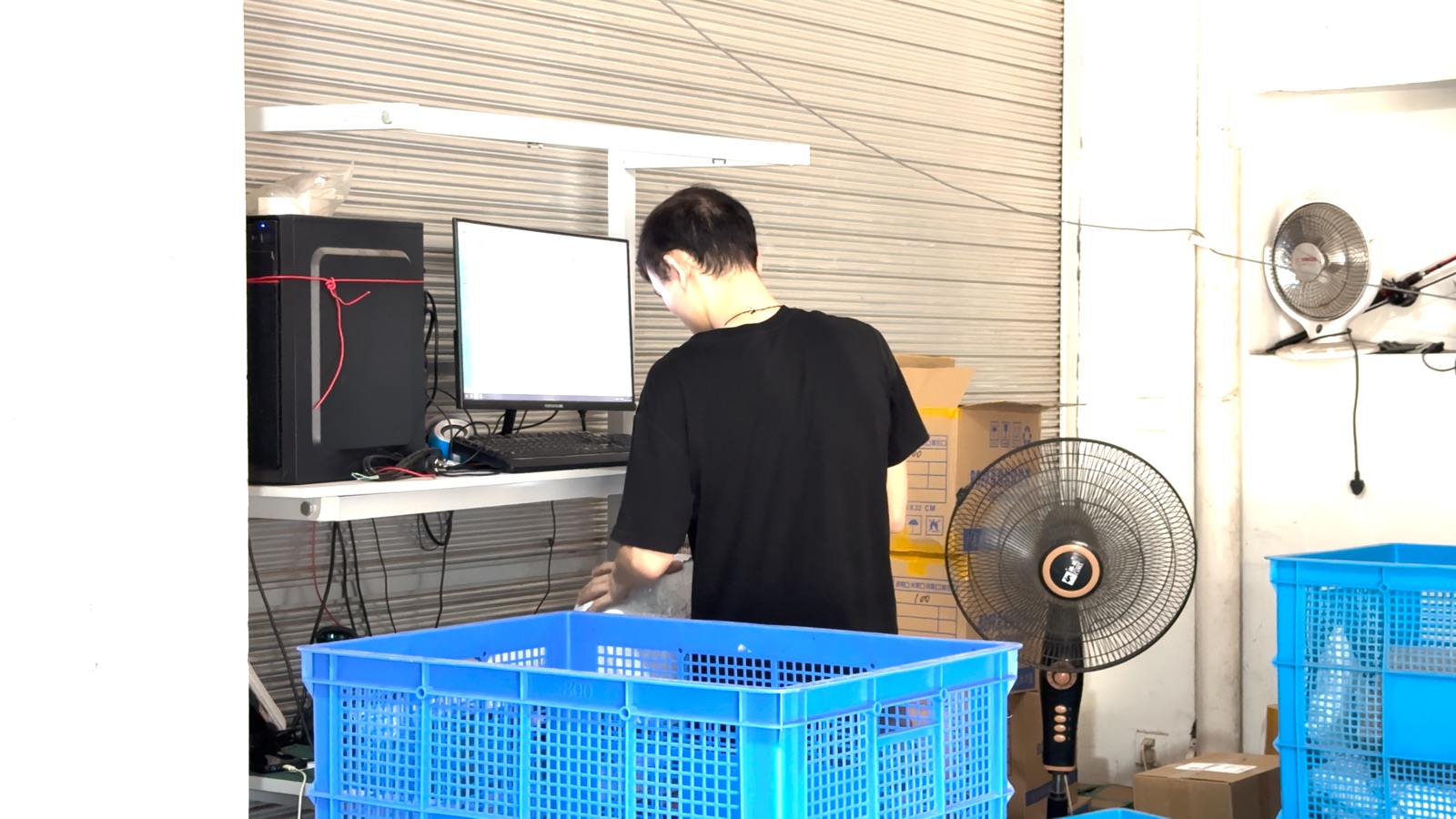
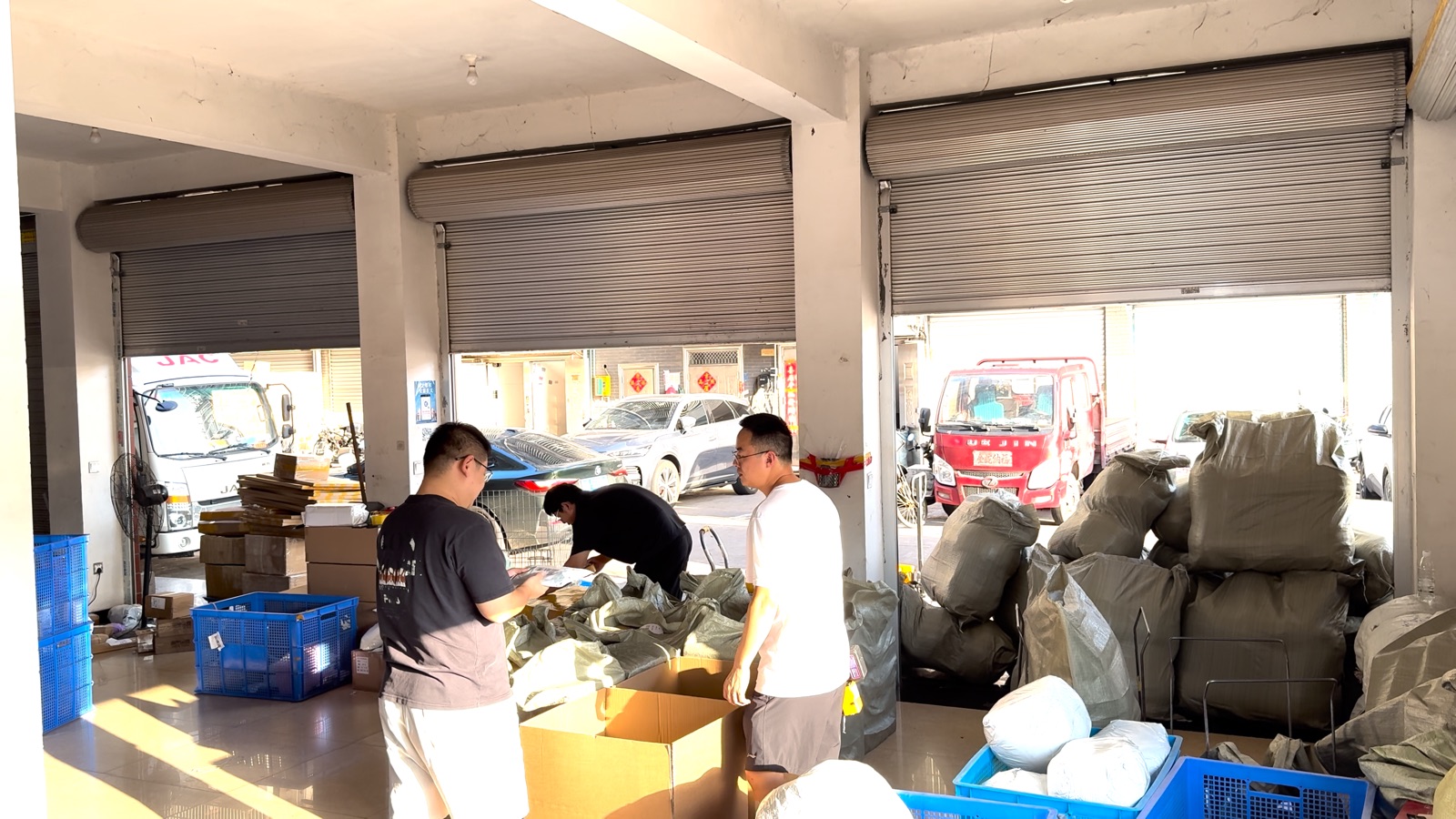
A pattern we see across the orders we pack every day
A mid-size store selling home goods into the UK and Germany came to us with a return rate sitting around 9-11%, most of it tagged “refused at delivery” rather than product defects. Their checkout was not set up to collect VAT at all — every parcel arrived DDU, and couriers were charging VAT plus a handling fee on the spot. Once they completed IOSS registration through an intermediary and switched to collecting VAT at checkout, refused-parcel returns dropped to the 2-3% range within two months, which is closer to what we see across accounts running properly. That gap was never a shipping-speed problem or a product-quality problem. It was a paperwork gap between checkout and the border.
When our QC desk photographs a batch before dispatch, we are checking the product, the packaging, and the invoice values that go with it — accurate invoice values matter for customs clearance, and getting them wrong is one of the quieter causes of delayed or rejected parcels at the EU or UK border.
A short checklist before you scale UK/EU orders
- Confirm which markets you actually sell into — EU-only, UK-only, or both — since the schemes do not overlap.
- Register for the IOSS scheme (via an intermediary if you are outside the EU member states) if you sell parcels under €150 to EU consumers.
- Register for VAT with HMRC if you sell parcels under £135 to UK consumers.
- Turn on VAT collection at checkout in Shopify or WooCommerce and confirm the correct VAT rate is applied per destination country, so you pay VAT correctly at the right rate.
- Price in the EU’s temporary €3-per-item duty on sub-€150 consignments, in force since July 2026, so it does not quietly eat your margin.
- Ask your supplier or fulfillment partner what shipping line and clearance method they use above the threshold values — this is where DDP versus DDU decides whether your customer gets a bill.
- Keep invoice values accurate and consistent between your store, your supplier’s paperwork, and the customs declaration.
If you want the tariff-inclusive number for your exact SKU before you commit to a shipping route, send it through our quote form — we reply within 24 hours.
When this does not apply, or when another option fits better
If you are doing under 10 orders a day into the EU or UK, the VAT registration overhead can outweigh the benefit for now — a marketplace platform that already handles VAT collection on your behalf may be the simpler path while you validate the product. Free catalog apps and marketplace platforms genuinely earn their place at that stage; there is no reason to take on IOSS registration paperwork before you have proven demand. Also, none of this is tax advice — IOSS eligibility, intermediary requirements, and VAT return deadlines vary by situation, and a licensed customs broker or accountant should sign off on your specific VAT obligations, especially if you are also registering for OSS or selling B2B.
Where a sourcing agent actually helps
A sourcing agent is not going to classify your products under HTS codes, file your customs entries, or register your IOSS number — those are tax and compliance obligations that sit with you as the seller. What we can control is what happens before the parcel reaches the border: accurate product invoices, consistent packaging, QC photos on every batch, and shipping lines that clear customs formally rather than routes that quietly dodge it. Operating since 2019, the pattern we keep seeing is that VAT surprises and customs surprises come from the same root cause — mismatched paperwork between the store, the supplier, and the courier — and both get fixed the same way, by tightening that paperwork before dispatch, not by hoping the courier sorts it out.
If your UK or EU orders are getting refused at the door, or you are not sure whether your current supplier’s shipping route will survive a customs check, get a free, tariff-inclusive sourcing quote at eboxman.com/get-solution. We reply within 24 hours, no minimum order, no monthly fee.
Private Agent for Dropshipping Success