
Most Shopify and WooCommerce sellers start fulfillment with a spreadsheet. Someone exports orders, someone else pastes them into a supplier portal, and somewhere between the two, an address gets truncated or a SKU gets typed wrong. That works fine at 10 orders a day. It falls apart at 40.
The fix is not a bigger spreadsheet. It is moving order data off CSV files entirely and onto a synced workflow where your store, your supplier, and your tracking numbers talk to each other automatically. This is what it actually takes to automate dropshipping fulfillment without losing control of quality.
Key takeaways
- 30-40 orders a day is roughly where manual CSV uploads start producing enough errors to hurt your refund rate.
- API sync eliminates re-typed order details and cuts out-of-stock mismatches between your storefront and your supplier’s actual inventory.
- Order routing rules (by SKU, by warehouse, by shipping speed) do the sorting a human used to do by hand.
- Automation fixes speed and accuracy. It does not fix landed cost — that is a separate, and equally common, blind spot.
- A dedicated agent plus API sync tends to beat pure automation software once returns and out-of-stock delays are counted into the real cost.
Why CSV-based fulfillment breaks down as you scale
A CSV export is a snapshot. The moment you download it, it is already out of date. Inventory changes, an order gets canceled, a customer edits their address after checkout, and none of that reaches the file sitting in someone’s downloads folder.
The manual work adds up faster than sellers expect
Re-keying order details from a spreadsheet into a supplier’s order form takes two to four minutes per order if nothing goes wrong. At 50 orders a day, that is over two hours of manual work just for data entry, before anyone packs a box.
Across the orders we pack every day at EboxMan, the pattern we keep seeing is that sellers do not lose money on shipping costs. They lose it on mismatched SKUs, stale inventory counts, and orders that sat in a CSV queue for six hours before anyone noticed a supplier was out of stock.
CSV workflows do not fail loudly. They fail quietly, one mistyped SKU at a time, until the refund rate tells you something is wrong.
What automating dropshipping fulfillment actually means
Automation here does not mean a fully hands-off dropshipping business. It means the repetitive, error-prone steps run on a synced workflow instead of a human copying rows.
The three workflows worth automating first
In order of impact, most sellers should automate: order placement (push new orders to your supplier the moment they land), inventory sync (keep stock counts accurate on your storefront), and tracking sync (pull tracking numbers back into Shopify or WooCommerce automatically). Everything else is a nice-to-have by comparison.
Pro tip: Automate tracking sync before you automate anything else. It is the workflow customers notice fastest, and the one that generates the most support tickets when it is missing.
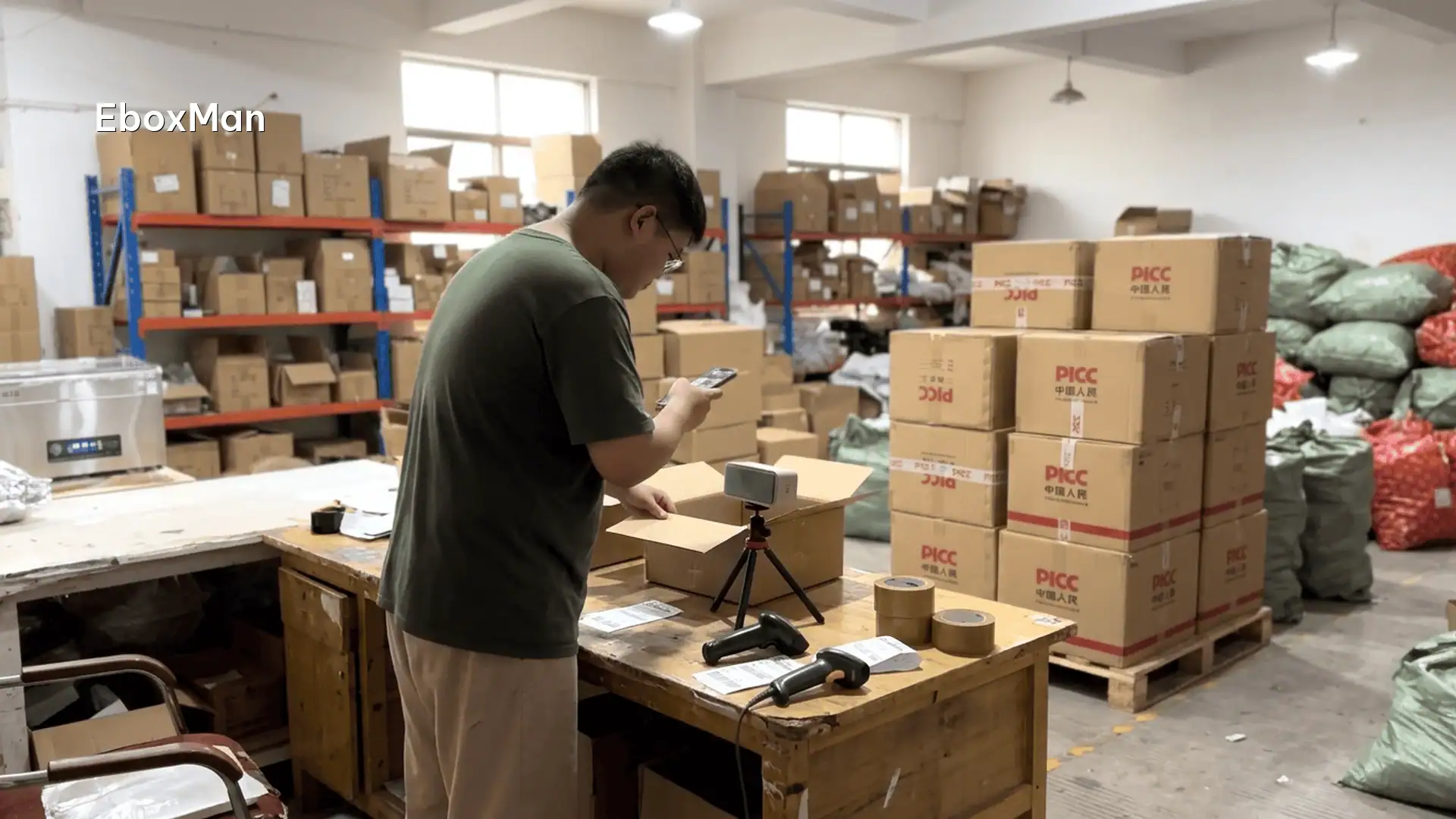
Order routing and inventory sync: the two workflows that matter most
Order routing decides which warehouse or supplier fulfills a given order, based on SKU, stock level, or shipping zone. Inventory sync keeps your storefront’s “in stock” status honest in real time.
What happens without them
Without routing rules, every order goes to one place regardless of what makes sense, which is fine until that supplier runs out of a bestseller. Without inventory sync, your store keeps selling a product that is already gone, and every one of those orders becomes a refund or an awkward delay email.
What good routing looks like in practice
A workable setup routes by three signals: product category, current stock level at the fulfillment point, and destination country for duty and shipping-speed reasons. This is also where a fulfillment center earns its keep — a single point that consolidates stock and syncs it back to your storefront, instead of you juggling five supplier dashboards.
An out-of-stock item that still shows “add to cart” is not a fulfillment problem. It is an inventory sync problem wearing a fulfillment costume.
Building the stack: Shopify, WooCommerce, API sync, and where an agent fits
Most ecommerce platform setups now support API sync natively or through a dedicated app, rather than relying on generic automation software or third-party connectors to shuffle files between systems. Shopify’s API and WooCommerce’s REST endpoints both support order, inventory, and tracking sync directly.
Where a third-party agent adds value beyond software
Sync tools move data. They do not inspect the product, catch a wrong color before it ships, or renegotiate a supplier price when a batch comes in defective. That is the layer a sourcing agent covers, and it is worth reading through what a sourcing agent actually does day to day before assuming software alone solves fulfillment.
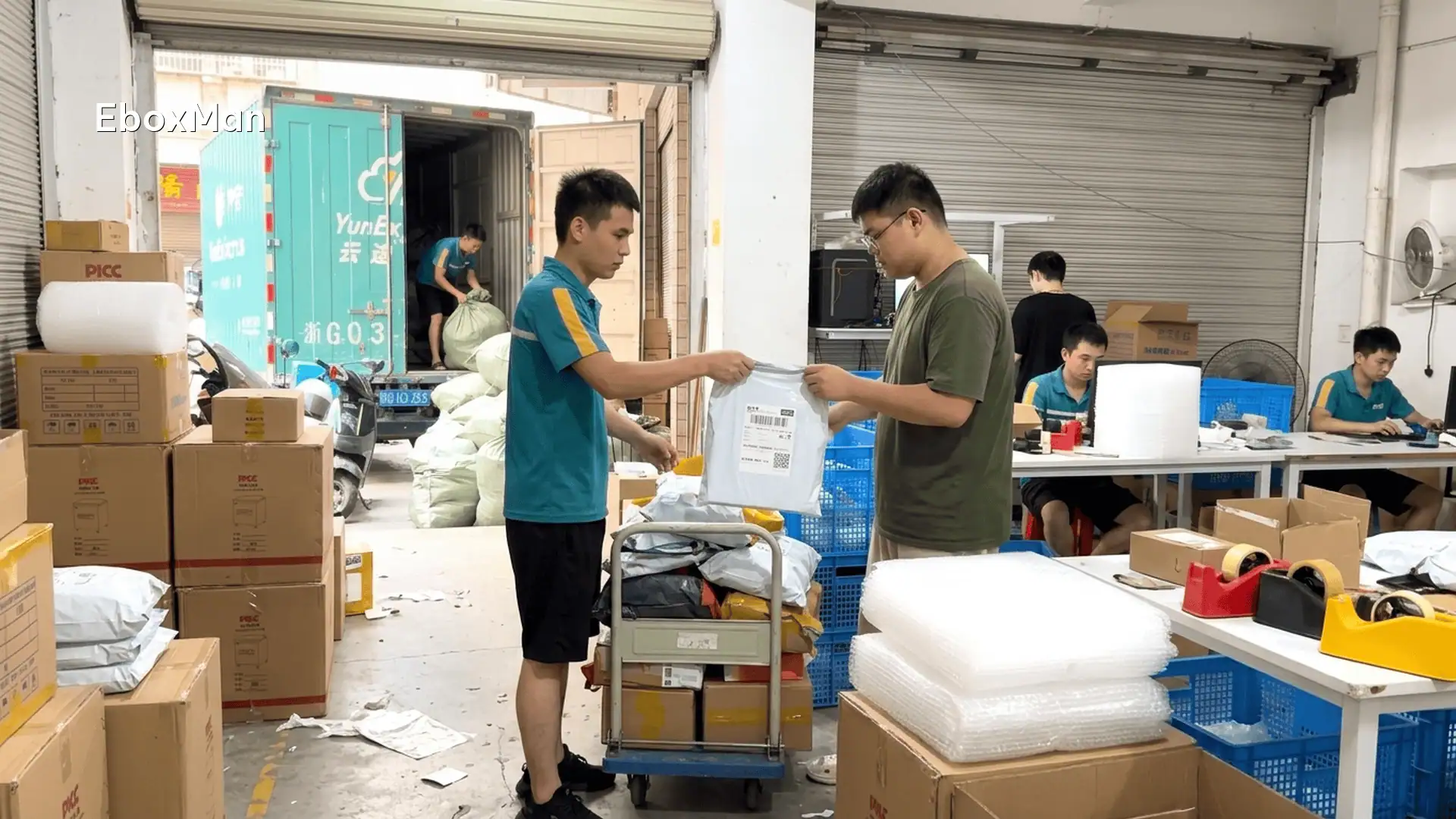
When our QC desk photographs a batch before dispatch, the goal is not paperwork. It is catching the 2-4% of units that would otherwise become a return three weeks later, after the customer has already opened the box.
Watch out: Some free catalog apps sync inventory but source from shared warehouse stock with no per-batch quality check. Fast sync with no QC just moves the problem from “slow” to “wrong.”
The landed cost problem automation can’t solve on its own
Sync software fixes speed and accuracy. It says nothing about what a unit actually costs to land in a customer’s hands after duties. De minimis no longer applies to China-to-US parcels, and every shipment now needs formal customs entry.
Section 301 duties run 25% on most goods, 7.5% on List 4A items, and Section 122 adds a 15% surcharge on top. If your automation platform quotes a product cost with no reference to landed cost under Section 301 and Section 122, you are pricing blind.
DDP versus DDU changes who eats that cost
Shipping DDU (duty unpaid) means your customer gets a surprise bill at the door, which is one of the fastest ways to generate a refund and a one-star review. Understanding the difference between DDP and DDU shipping matters as much as any API integration you set up.
If you want the tariff-inclusive number for your exact SKU, send it through our quote form — we reply within 24 hours.
A real workflow, from order placement to tracking number
One seller we work with was running roughly 45 orders a day through a manual CSV process, uploading files twice daily to a supplier portal. Refund rates from wrong items and stock mismatches sat around 9-11%, and average delivery ran 12-14 days.
After switching to synced order routing plus DDP shipping with pre-dispatch QC, defect-driven returns dropped to roughly 2-3%, and delivery settled closer to 7-9 days door to door. Landed cost per unit stayed flat because duties were already built into the quoted price, not added after the fact.
The honest math on agent cost
An agent’s margin is a real line item, and it is fair to weigh it against doing everything yourself. But consolidated shipping across many sellers’ orders, plus a lower refund rate from QC catching defects before they ship, often nets out cheaper per delivered unit than the “free” DIY route once refunds and reships are counted.
| Approach | Refund rate | Delivery time | Duty handling |
|---|---|---|---|
| Manual CSV + DDU | 9-11% | 12-14 days | Bill at customer’s door |
| API sync, no QC layer | 5-7% | 9-12 days | Varies by shipper |
| Synced routing + agent QC + DDP | 2-3% | 7-9 days | Included in unit price |
Checklist: moving off CSV this quarter
- Turn on native order sync between your storefront and supplier or fulfillment partner.
- Set inventory sync to update at least hourly, not once a day.
- Add routing rules by SKU and destination before adding more products.
- Confirm tracking numbers push back to your store automatically, not by manual lookup.
- Check whether your shipping is DDP or DDU before you scale ad spend.
When this does not apply
If you are under 10 orders a day, full API integration is often overkill. A free catalog app or marketplace platform’s built-in tools can carry you until volume justifies the switch, and a sample order is usually the cheapest way to test a supplier before committing to any workflow.
Frequently asked questions
Can I automate dropshipping fulfillment without coding?
Yes. Shopify and WooCommerce both support app-based integrations that handle order sync, inventory sync, and tracking sync without custom code. Most sellers only need custom development once they are routing across several suppliers or warehouses at once.
Does automation fix out-of-stock issues from AliExpress-sourced products?
Automation reduces the lag between a supplier going out of stock and your storefront reflecting it, which cuts wasted orders significantly. It does not prevent stockouts themselves — that still depends on supplier reliability and how many alternates you have sourced.
How does DDP shipping fit into an automated workflow?
DDP shipping means duties are paid before the parcel reaches the customer, so there is nothing for your automation to reconcile after delivery. EboxMan ships DDP on lines that clear US customs formally, with duties included in one quoted price and nothing added at the door.
Is it worth using a sourcing agent instead of pure automation software?
Software handles data movement well. An agent adds quality control, factory-direct pricing, and a person to escalate to when a batch has a defect, which automation alone cannot do. Most sellers past 50 orders a day get more value combining both than relying on either alone.
Automating dropshipping fulfillment starts with getting order data off spreadsheets, but the real gains show up when sync is paired with honest landed cost and quality control before a parcel ever leaves the warehouse. If you want a tariff-inclusive quote for your SKUs, built around DDP shipping and pre-dispatch QC, our team replies within 24 hours.
Private Agent for Dropshipping Success