You turn on Performance Max, watch the spend climb, and three days later you are refreshing Shopify orders faster than your supplier can pack them. Or you try Meta Advantage+, get a burst of cheap purchases, and then a wave of returns eats the margin you thought you had.
Both platforms sell the same promise: feed the algorithm a budget and a product feed, and it finds buyers for you. The reality is that performance max dropshipping campaigns and Advantage+ campaigns behave differently depending on your product, your budget tier, and — the part most guides skip — whether your fulfillment can keep up with what the algorithm finds.
Key takeaways
- Performance Max needs roughly 30-50 conversions a month per campaign before its bidding stabilizes.
- Advantage+ leans on pixel and Conversions API signal, not search intent — it favors visual, impulse-buy products.
- Under $20/day, manual campaigns usually outperform both AI systems; the algorithms need volume to learn.
- A sudden spend spike from either platform is a fulfillment problem before it is an ad problem.
- Feed errors and out-of-stock SKUs quietly cap your reach in both systems.
Performance Max for dropshipping: what it actually optimizes
Performance Max is a single campaign type that pulls your Shopify product feed through Google Merchant Center and places ads across Search, Shopping, Display, YouTube, Gmail, and Maps at once. You do not pick placements. You give it a budget, a target ROAS or CPA, and creative assets, and the bidding system decides where your dollars go.
Why data volume matters more than budget size
The algorithm learns from conversion events. A $10/day campaign with no purchase history has nothing to optimize toward, so it spends broadly and inefficiently. A $50/day campaign that already has 20-30 conversions logged starts finding cheaper, higher-intent traffic within a week or two.
This is why two stores running identical products and identical budgets can see wildly different results — one has clean historical conversion data feeding the bidding model, the other does not.
Performance Max rewards clean data and conversion volume before it rewards a bigger budget.
Meta Advantage+: same idea, different signal
Advantage+ shopping campaigns work on a similar principle — pool your creative assets and product catalog, let the system test audiences and placements across Facebook, Instagram, and Reels. The difference is the signal it optimizes against.
Google Shopping ads is built on search intent: someone typed a query or browsed a category. Advantage+ is built on behavioral and pixel data: who scrolls past similar products, who has purchased comparable items before. That makes it stronger for visually striking, impulse-buy products with no obvious search term, and weaker for products people actively research before buying.
Advantage+ sells to people who did not know they wanted the product yet — Performance Max sells to people already looking for it.
Budget breakpoints — when each engine actually works
Below a certain daily spend, both platforms are guessing more than learning. Here is a practical breakdown based on typical conversion thresholds.
| Daily budget | Performance Max | Advantage+ | Best fit |
|---|---|---|---|
| Under $20 | Struggles to gather signal | Struggles to gather signal | Manual campaigns, tighter targeting |
| $20-$50 | Early learning phase | Early learning phase | Test one platform, not both |
| $50-$150 | Stabilizing bids | Stabilizing bids | Products with search demand → PMax; visual products → Advantage+ |
| $150+ | Scaling with confidence intervals | Scaling with confidence intervals | Run both, split by product type |
Pro tip: Do not run Performance Max and Advantage+ at full budget on the same product in the same week. You will not know which conversion signal actually drove the sale, and both algorithms will fight over attribution.
When scaling ad spend breaks your fulfillment
This is the part ad guides leave out. Both platforms are built to scale fast once they find a winning audience segment. Order volume can jump 3-5x in under two weeks — and that jump lands on your supplier, not on Google or Meta.
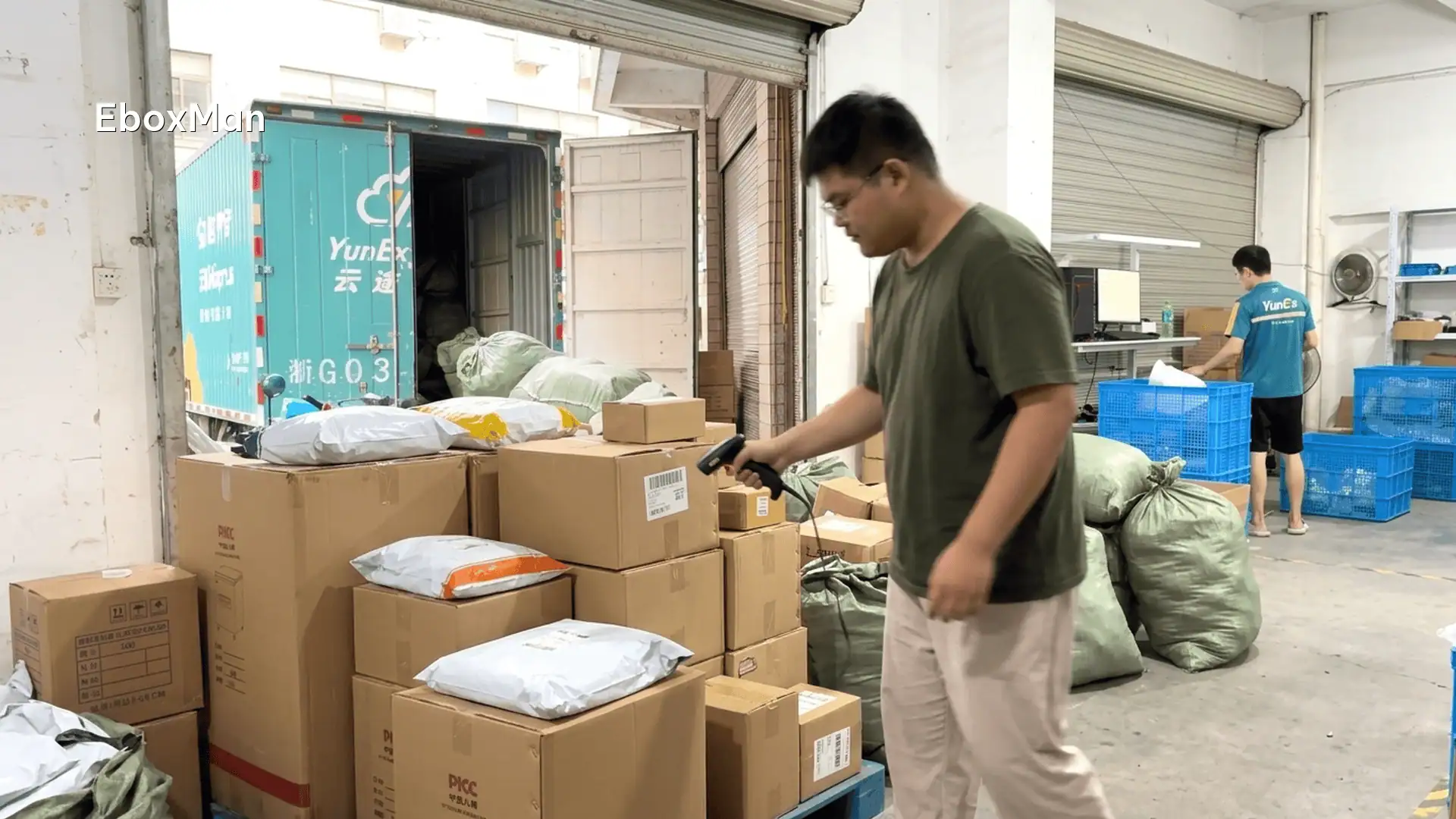
A pattern we see across the orders we pack every day
A typical scenario: a seller runs Advantage+ on a home-goods SKU, spend climbs from $50/day to $400/day over ten days, and daily orders jump from roughly 15 to 140. With a shared-warehouse supplier working through a queue, processing time stretched from 2-3 days to 7-9 days, and defect-return complaints rose from around 2% to 8-9% because rushed picking meant less quality control per batch.
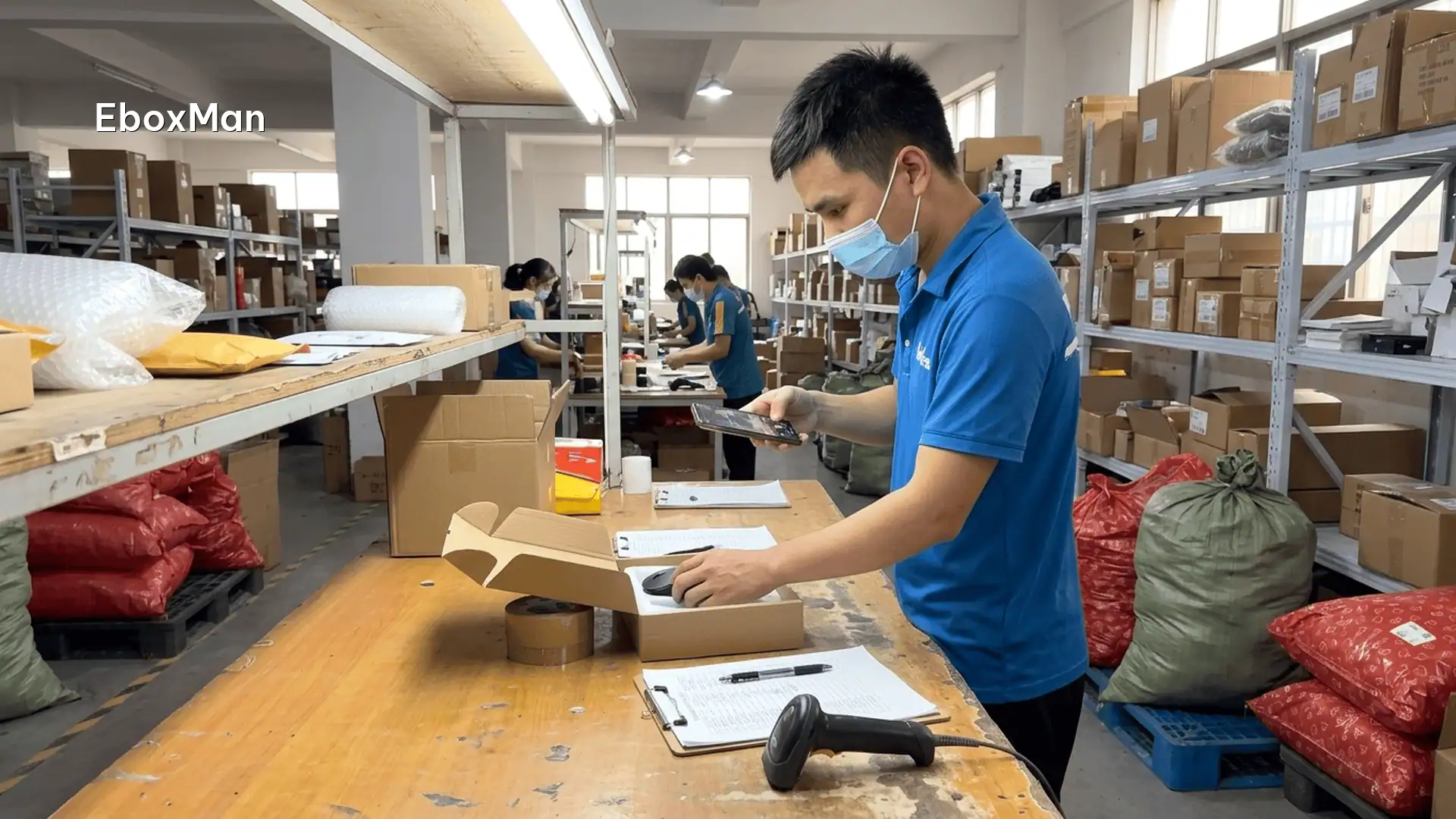
After moving fulfillment to a single dedicated agent workflow with photo QC before dispatch, processing settled back to 2-3 days, delivery averaged 8 days door-to-door, and returns dropped back under 3%. Landed cost per unit barely moved because Section 301 and Section 122 duties are fixed regardless of supplier — the difference was consistency, not price.
A winning ad campaign that outruns your fulfillment does not scale your business — it scales your refund rate.
If you want the tariff-inclusive landed cost for your exact SKU before you scale ad spend, send it through our quote form — we reply within 24 hours.
Bidding, conversion signals, and keeping the algorithm honest
Both Performance Max and Advantage+ optimize toward whatever conversion value you feed them. If your tracking counts a $5 add-to-cart the same as a $40 purchase, the bidding system will chase the wrong outcome.
What to check before you scale spend
- Confirm purchase value is passed accurately to both Google Ads and Meta Conversions API — not just a fixed “1 conversion” event.
- Remove duplicate conversion tracking between GA4 and native Shopify pixels; double-counting inflates apparent ROAS.
- Sync your Merchant Center feed daily so out-of-stock SKUs do not keep serving and tanking your quality score.
- Set a maximum daily order cap in Shopify or your fulfillment app until your supplier confirms they can absorb a spike.
- Check your DDP shipping terms before scaling internationally — a DDU shipment that gets hit with an unexpected duty bill at the customer’s door will show up as returns, not as an ad problem.
Watch out: A single disapproved product in your feed can quietly suppress the whole campaign’s reach in Performance Max. Check Merchant Center diagnostics weekly, not just when spend drops.
When this does not apply: if you are under roughly 10 orders/day and testing a new niche, marketplace platforms or manual, narrowly targeted campaigns usually outperform either AI system — you simply do not have the conversion volume yet for the algorithm to learn from.
Frequently asked questions
Is Performance Max good for dropshipping specifically?
Yes, once a store has around 30-50 monthly conversions and a clean Shopify-to-Merchant-Center feed. Below that threshold, the bidding system has too little data to find efficient traffic, and manual Shopping campaigns tend to perform better.
Should I run Meta Advantage+ and Google Performance Max at the same time?
You can, but split by product type rather than running both on the same SKU simultaneously. Search-intent products tend to do better on Performance Max; visually driven impulse products often convert better on Advantage+.
Why did my ad costs stay flat while orders spiked?
That usually means the algorithm found an efficient audience segment and is reinvesting saved cost into more impressions. It is a good ad signal, but it is also the exact moment fulfillment capacity gets tested.
Does scaling ad spend affect landed cost or duties?
No. Section 301 and Section 122 duty rates do not change with order volume. What changes is your exposure to stockouts and rushed quality control if your supplier cannot absorb the spike — that is a fulfillment risk, not a tariff one.
Whichever platform you scale on, the ad spend only pays off if the order behind it ships on time and arrives without a surprise bill. EboxMan has processed orders at 10,000+ a day since 2019, with photo QC before every batch leaves the warehouse and DDP shipping that keeps duties out of your customer’s hands.
If you are about to push Performance Max or Advantage+ into scaling mode, get your tariff-inclusive landed cost locked in first.
Private Agent for Dropshipping Success