
If you buy from three or four suppliers in China and ship each order separately, you are paying for three or four customs entries, three or four sets of handling fees, and three or four shots at a lost or delayed parcel. Most sellers never add it up. When they do, the number is uncomfortable.
Shipment consolidation customs china is the fix that freight forwarders and fulfillment agents use every day, and it is simpler than it sounds: combine multiple shipments from multiple suppliers into one container or one pallet, clear it through customs as a single entry, and split the savings across every unit inside it. Here is how the math actually works, and where it does not apply.
Why every parcel from China now needs a formal customs entry
The de minimis exemption that let low-value parcels enter the US duty-free is gone. Every shipment from China to the US now goes through formal customs clearance, and duties apply: Section 301 tariffs at 25 percent on most goods (7.5 percent on List 4A items), plus a Section 122 surcharge of 15 percent on top. IEEPA-related duties can stack on certain categories as well. We break down how to calculate this on your own SKUs in our Section 301 and Section 122 landed cost guide — worth bookmarking before you price anything.
The part sellers miss: customs clearance has a fixed cost per entry, no matter how small the shipment is. A single-item parcel and a 500-unit pallet both need a broker, a bond check, an HTS classification, and a clearance filing. Ship ten small parcels and you pay that fixed cost ten times. Ship one consolidated container and you pay it once.
What shipment consolidation actually means
Consolidation is the practice of combining cargo from multiple suppliers, or multiple smaller orders, into one shipment that moves as a single unit through freight, customs, and delivery. It applies whether you are doing sea freight or air freight:
- LCL (less than container load): your goods share container space with other importers’ cargo. Cheaper per unit than a dedicated container, slower transit, common for growing sellers who are not yet at full container volume.
- FCL (full container load): you fill the whole container yourself. Best per-unit shipping cost once you have the volume to justify it, but you are paying for space you may not fully use.
- Air freight consolidation: multiple suppliers’ cartons combined into one air waybill, one customs entry, faster transit than ocean freight, still cheaper per kilo than shipping each supplier’s box separately by express courier.
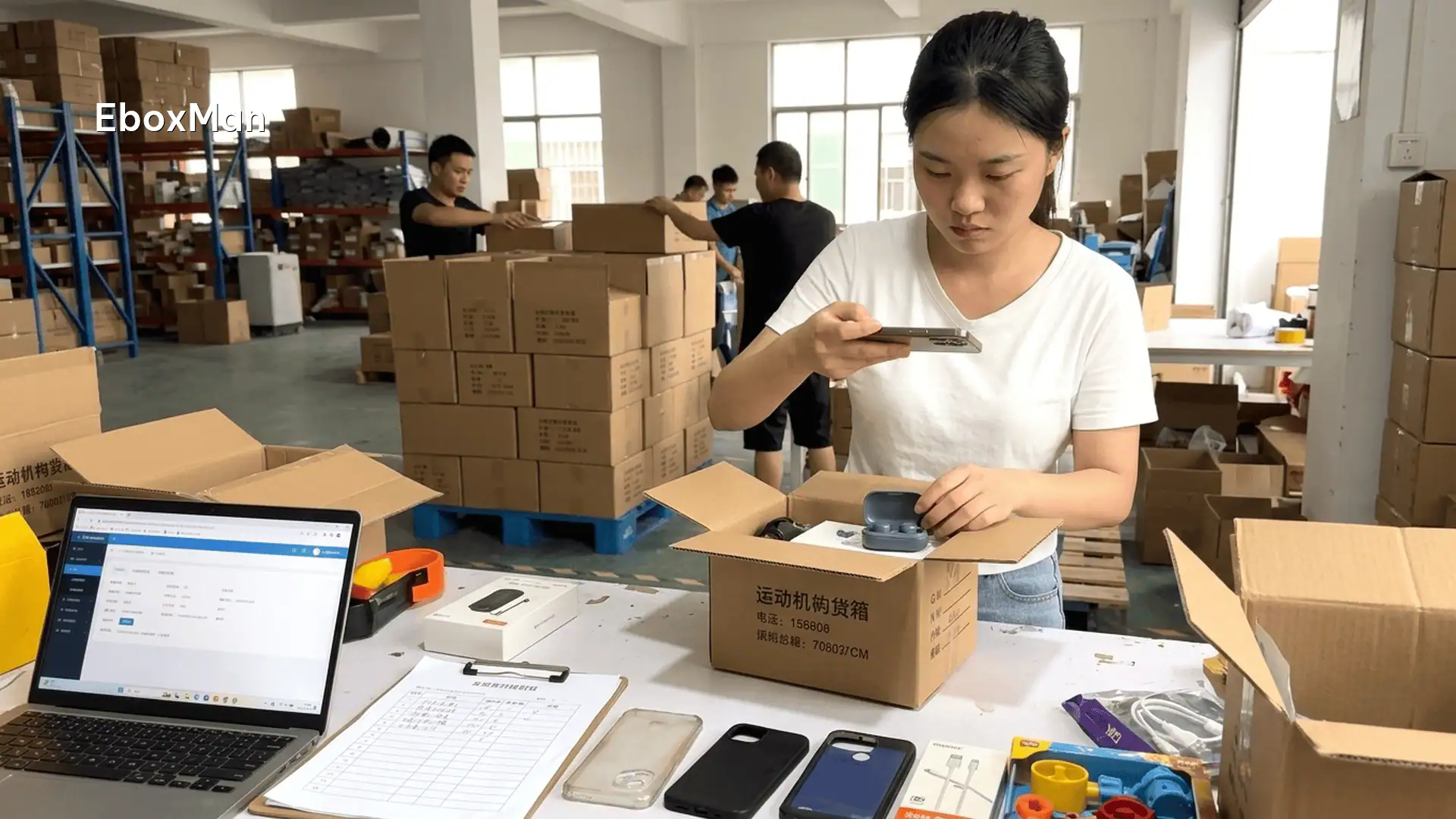
A freight forwarder or sourcing agent handles the physical part: picking up cargo from different suppliers, consolidating it in a warehouse near the port or airport, and building one shipment that a customs broker clears as a single entry.
The real cost difference: one entry versus five
Numbers make this concrete faster than adjectives do. Here is a simplified comparison for a seller ordering from four suppliers, 500 units total, moving from China to a US warehouse.
| Approach | Customs entries | Broker/entry fees | Per-unit shipping cost | Typical transit |
|---|---|---|---|---|
| Separate shipments, 4 suppliers | 4 | 4x fixed entry fees | Higher — small-parcel rates | Uneven, staggered arrivals |
| Consolidated LCL, 1 pallet/container share | 1 | 1x fixed entry fee | Lower — shared container rate | 18-30 days, arrives together |
| Consolidated air freight | 1 | 1x fixed entry fee | Mid — faster than sea, cheaper than 4 express parcels | 6-12 days, arrives together |
The exact figures vary by weight, volume, and category, but the pattern holds across almost every account we manage: fewer entries means fewer fixed costs spread across more units, and that is where the per-unit savings come from — not from dodging any duty, since Section 301 and Section 122 apply the same rate whether the shipment is consolidated or not.
A pattern we see across the orders we pack every day
A mid-size seller came to us ordering phone accessories from three factories separately, each shipped direct to their fulfillment center. Landed cost was running $4.10-$4.60 per unit once duties and per-shipment fees were counted, and roughly 6-8 percent of units arrived with a defect their own spot-checks had missed, because each supplier shipped on its own schedule with no shared QC point.
We consolidated the three suppliers into one warehouse pickup, ran photo and video QC on the combined batch before it left China, and shipped it as a single entry. Landed cost per unit dropped into the $3.20-$3.70 range, defect-related returns fell to under 2 percent, and delivery arrived as one predictable window instead of three staggered ones. Nothing about the duty rate changed — the savings came from fixing entry, handling, and QC into one pass instead of three.
What can go wrong with consolidation (checklist before you commit)
- Mixing suppliers with mismatched production schedules — one late factory delays the whole consolidated shipment.
- Skipping QC on the combined batch — one supplier’s defect rate can drag down your whole shipment’s return rate.
- Choosing LCL when your volume already supports FCL — you are paying a shared-space premium you do not need.
- Working with a forwarder that will not confirm which shipping lines they use for formal clearance — ask, in writing, before cargo leaves the warehouse.
- Assuming consolidation reduces the duty owed — it does not. Section 301 and Section 122 apply per HTS code and value, regardless of how many shipments you combine them into.
If you want the tariff-inclusive landed cost for your exact SKU mix before you commit to a consolidated shipment, send it through our quote form — we reply within 24 hours.
DDP consolidation versus DDU: who actually pays at the door
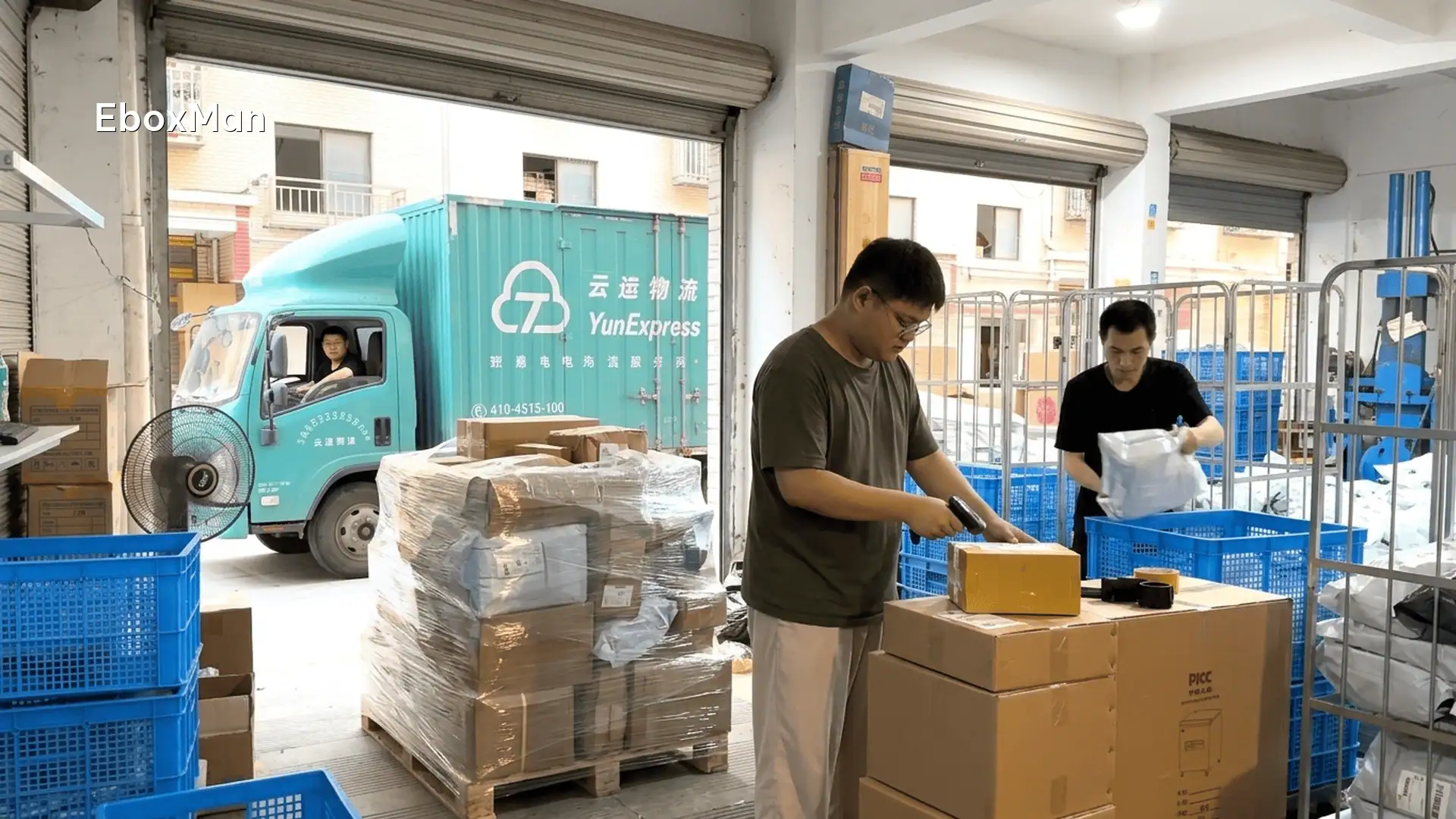
Consolidation solves the freight and customs-entry side of the cost equation. It does not solve who pays duties, and when. That is a separate question, and it is the one that determines whether your customer gets a surprise bill at delivery. Under DDU (delivered duty unpaid), the customer or the seller pays duties when the parcel lands, often as an unexpected charge at the door. Under DDP (delivered duty paid), duties are settled before the parcel ever reaches the destination country, and the price you were quoted is the price you pay. We cover the mechanics in detail in our DDP vs. DDU shipping guide. Pair consolidation with DDP and you get both the lower per-unit freight cost and the certainty that nothing is added later.
When consolidation is not the right move
Consolidation earns its keep once you have enough volume to fill shared container space efficiently and enough order flow to justify combining multiple suppliers into one pickup schedule. If you are testing a new product at under 10 orders a day, marketplace platforms and shared-warehouse suppliers are often the faster, lower-friction choice — you are not yet moving enough weight or units to see a meaningful per-unit drop from consolidation, and the coordination overhead is not worth it yet. Consolidation becomes worth arranging once you are ordering from two or more suppliers regularly, or once single-supplier volume is high enough to fill a shared container slot on its own.
How this runs through an agent versus doing it yourself
You can absolutely arrange consolidation yourself: find a freight forwarder near your suppliers’ factories, negotiate warehouse consolidation, book the container or air waybill, and hire a licensed customs broker to file the entry. Plenty of established importers do exactly that once volume justifies the in-house effort.
Where a sourcing agent earns its margin is in the coordination layer: picking up from multiple suppliers on staggered schedules, running QC photos on the combined batch before anything ships, and routing the consolidated cargo on shipping lines that clear customs formally rather than cheap routes that skip formal entry and risk seizure or dark tracking — a real exposure we detail in our piece on fake shipping label risks. EboxMan has run this model since 2019, processing more than 10,000 orders a day, and every batch gets photo and video QC before it leaves China, with defects rejected at the factory rather than caught after delivery.
The pricing model stays simple on our end: one DDP price, all import duties included, on shipping lines that clear US customs formally — duties paid before delivery, nothing added at the customer’s door. We do not classify anyone’s HTS code for them or promise to reduce what is legally owed; the duty rate is the same for every importer shipping legally. What changes with consolidation is the fixed cost per shipment, not the tax.
The takeaway
Shipment consolidation customs china is not a workaround for Section 301 or Section 122 — those rates apply the same whether you ship one parcel or fifty. What it changes is everything around the duty: fixed entry fees, per-unit freight, QC consistency, and predictable transit time. Fewer entries, combined suppliers, one clearance, lower cost per unit. That is the whole mechanism, and it holds whether you run it yourself with a freight forwarder or through an agent that handles the coordination for you.
If you are ordering from multiple suppliers and want to see what consolidation would actually do to your landed cost, get a free, tariff-inclusive quote at eboxman.com/get-solution. Send your SKUs and current order volume — we reply within 24 hours with one price, duties included, no bill waiting at your customer’s door.
Private Agent for Dropshipping Success