
You found a winning product, set up your Shopify store, and started running ads. Then the orders came in and you realized you have no idea who is actually sourcing, packing, or shipping anything.
A dropshipping agent is the person who closes that gap between “I found a product online” and “a customer has it in their hands.” Here is exactly what that job involves, what it costs, and when a marketplace platform or shared-warehouse supplier is honestly the better call instead.
Key takeaways
- A dropshipping agent sources, quality-checks, packs, and ships your orders — it replaces a supplier plus a fulfillment center, not just one of them.
- Agent fees typically show up inside the product price, not as a separate line item — compare landed cost per unit, not sticker price.
- Under roughly 10 orders/day, a marketplace platform is often cheaper; the agent model earns its margin at 50-500 orders/day and beyond.
- Every China-to-US parcel needs formal customs entry now that the de minimis $800 exemption is gone — landed cost includes Section 301 and Section 122 whether you use an agent or not.
- QC photos before dispatch are the single biggest lever against refunds eating your margin.
What does a dropshipping agent actually do
A dropshipping agent sits between you and the factory floor. Instead of you messaging ten suppliers, comparing samples, and hoping the tenth shipment looks like the first, one person or team handles that end to end.
Product sourcing and supplier vetting
You send a link, a photo, or a description of a trending product and the agent finds the factory, negotiates price, and confirms it can actually produce at your order volume. This is the part most new dropshippers underestimate — a supplier that looks fine on a marketplace listing can fall apart at 200 units a week.
Quality control before it ships
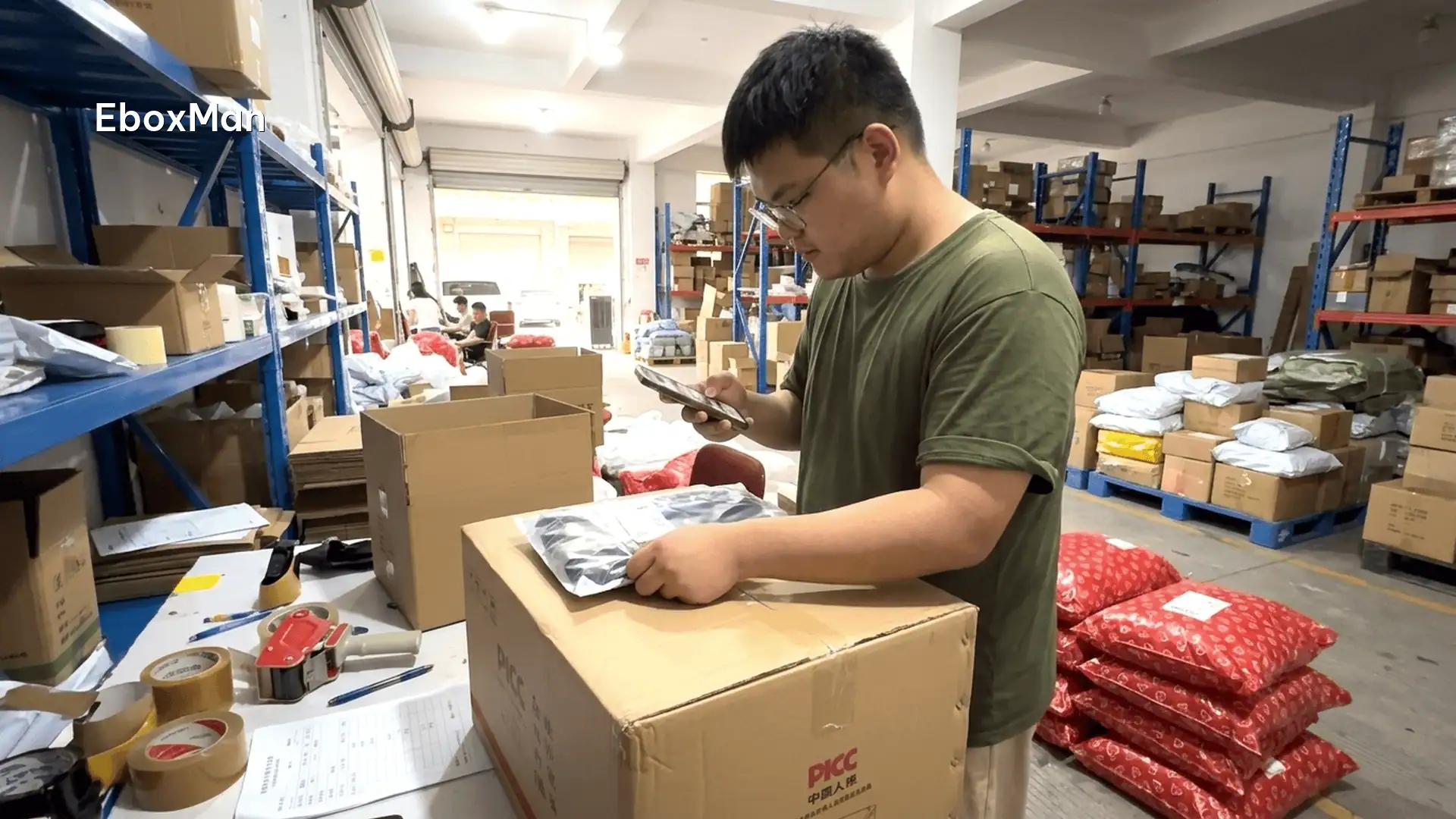
Across the batches we pack every day, the pattern we keep seeing is simple: sellers who skip QC find out about a defect from a one-star review, not from us. A dropshipping agent inspects and photographs units before they leave the factory, so defects get rejected before they cost you a refund.
Order fulfillment and shipping
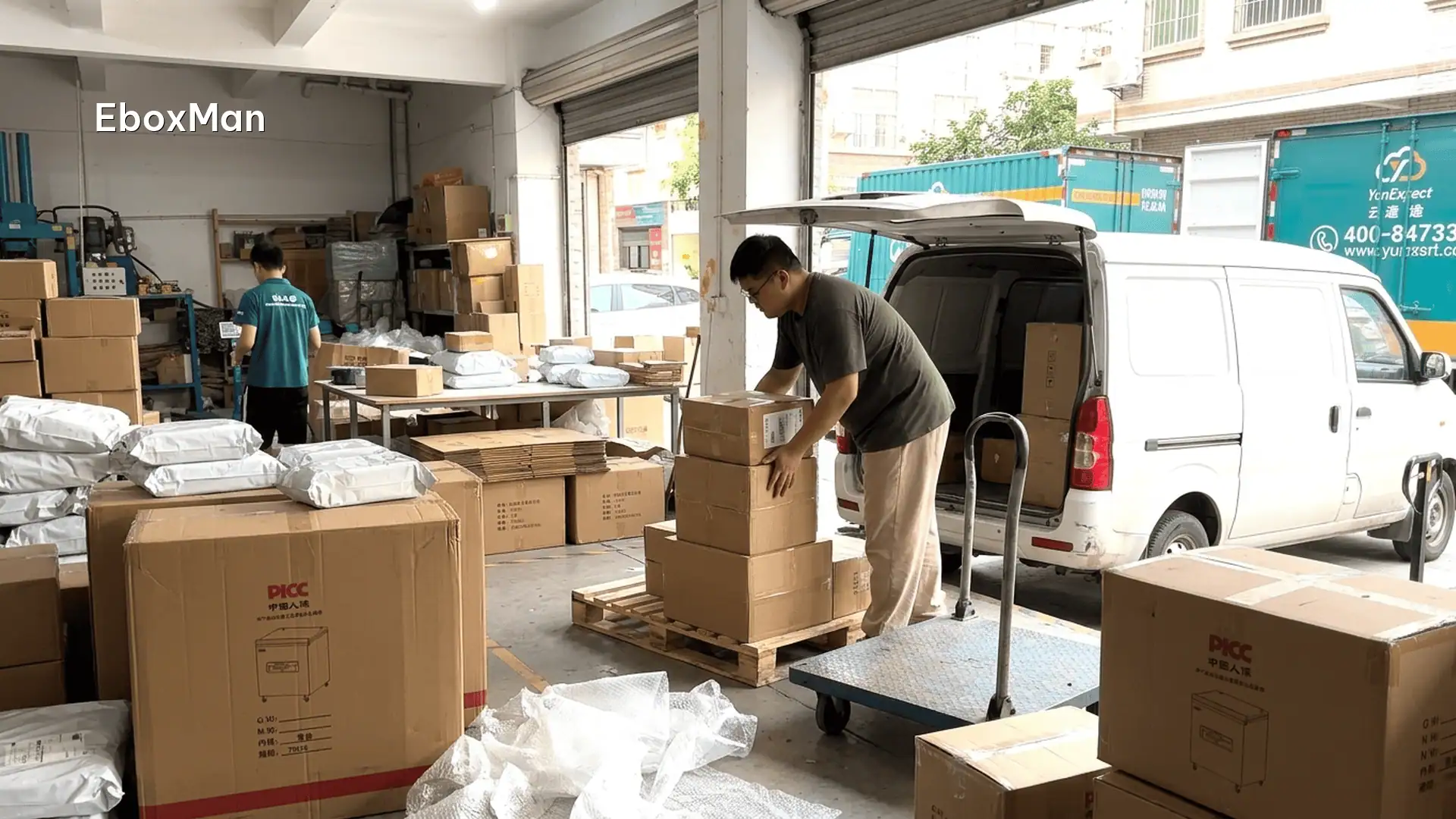
The agent receives your order (usually synced from Shopify or WooCommerce), pulls stock, packs it — with custom packaging if you want brand-specific boxes and inserts — and hands it to a carrier. This is order fulfillment in the literal sense, not just sourcing.
Customs and landed cost
The agent should be shipping on lines that clear customs formally and quoting you one price with duties already included, so nothing lands on your customer’s doorstep as a surprise bill. That is the difference between DDP and DDU shipping, and it matters more since Section 301 and Section 122 duties apply to nearly everything now.
A dropshipping agent replaces a supplier, a QC inspector, and a fulfillment center at once — that is why the fee lives inside the unit price, not as a separate invoice line.
What a dropshipping agent costs
Agents do not usually charge a monthly retainer. The cost sits inside the per-unit price you pay for each product, which makes it easy to miss and easy to compare wrong.
The math sellers skip
A free catalog app might show $8 per unit with individual air shipping around $5 and no QC — an 8% defect-driven return rate is common at that end. A dropshipping agent might quote $6.50 per unit with consolidated DDP shipping near $3, QC included, and a 2-3% return rate.
Run the numbers on 100 orders and the landed cost per unit, refunds included, usually favors the agent once you are past a low order volume — the margin math flips below that.
| Cost factor | Free catalog apps / marketplaces | Shared-warehouse supplier | Dedicated sourcing agent |
|---|---|---|---|
| Per-unit product cost | Higher (retail-adjacent) | Mid | Lower (factory-direct) |
| Shipping model | Individual parcel | Semi-consolidated | Consolidated, usually DDP |
| QC before dispatch | Rare | Inconsistent | Standard on each batch |
| Typical delivery (US) | 10-20 days | 8-15 days | 6-12 days |
| Custom packaging | Not available | Sometimes | Available (MOQ applies) |
Pro tip: ask any agent for landed cost per unit including duties, not just the factory price — that is the number that actually determines your margin.
If you want the tariff-inclusive number for your exact SKU, send it through our free quote form — we reply within 24 hours.
A real pattern from our operations
A seller running a home goods store came to us packing around 20 orders a day off a marketplace platform, with defect-driven returns near 8% and delivery averaging 15-18 days. Customers were emailing before packages even arrived.
After moving sourcing and fulfillment to a dedicated agent setup with QC photos before dispatch and consolidated DDP shipping, that seller scaled to roughly 150 orders a day, returns dropped to the 2-3% range, and delivery settled around 7-9 days door to door. Landed cost per unit moved a little on paper but net margin improved once refunds and re-ships stopped eating it.
Fewer refunds and faster delivery usually cover the agent’s margin before the lower factory price even enters the calculation.
Agent vs marketplace platform vs shared-warehouse supplier
None of these categories is wrong — they fit different order volumes and different stages of a business.
Marketplace platforms (the AliExpress-style model) are genuinely good for testing a new product with zero commitment and no minimum order. Shared-warehouse suppliers sit in the middle, often faster than a marketplace but with less control over which factory your product actually comes from. A dedicated sourcing agent earns its keep once order volume and brand consistency start to matter more than the lowest possible unit price on day one.
When this does not apply
If you are under roughly 10 orders a day and still validating whether a product sells at all, a marketplace platform or free catalog app is often the cheaper, faster option. Bringing in a dedicated agent before you have proven demand adds coordination overhead you do not need yet.
Watch out: any supplier or agent that pitches “no duties” or a suspiciously low shipping fee is likely using undervalued or fake labels — that risk lands on your account, not theirs. See what that actually costs sellers in this breakdown.
When you need a dropshipping agent
Use this checklist honestly — most of these need to be true at once, not just one of them.
- You are past roughly 50 orders a day and manual supplier messaging is eating your week.
- Refunds from defects are showing up often enough to hurt margin, not just occasionally.
- You want custom packaging or private label to build an actual brand, not just move units.
- Delivery time is costing you customers, and you need consistent tracking, not a guess.
- You are ready to commit to an order volume that makes factory-direct pricing worth negotiating.
Frequently asked questions
Is a dropshipping agent the same as a supplier?
Not quite. A supplier makes or holds the product; a dropshipping agent finds that supplier, checks quality, and handles fulfillment and shipping on your behalf — often working with several factories at once so you are not locked into one.
How much does a dropshipping agent cost?
Most agents do not charge a separate fee — the cost is built into the per-unit product price, which typically includes sourcing, QC, packing, and shipping. Compare landed cost per unit including duties, not the sticker price alone.
Do I still pay Section 301 and Section 122 duties if I use an agent?
Yes. Duties apply to every shipment that clears US customs formally, agent or not, and now that the de minimis $800 exemption no longer applies, there is no legal way around that. An agent shipping DDP simply includes those duties in one price so nothing shows up as a bill at delivery.
Can a dropshipping agent do custom packaging or private label?
Many can, usually once you hit a minimum order quantity that makes custom boxes or inserts cost-effective. Ask upfront what that minimum looks like for your specific product before you plan a launch around it.
EboxMan has been sourcing, QC-checking, and shipping orders for Shopify and WooCommerce sellers since 2019, handling 10,000+ orders a day with DDP shipping that already includes Section 301 and Section 122 duties. If you want a straight, tariff-inclusive number for your product before you commit to anything, send us the details and we will reply within 24 hours.
Private Agent for Dropshipping Success