
Your Shopify checkout says $34.99. Your customer pays $34.99. Three weeks later, a courier shows up at their door asking for another $11 in duty before they’ll hand over the box. Half of them refuse it. The parcel gets returned or destroyed, and you eat the cost twice — once on the product, once on the return shipping.
This happens because most sellers never actually calculate the duty rate on their product. They guess, or they skip it, or they assume a $10 phone case is too cheap to matter. It isn’t. The number comes from your HTS code, your country of origin, and a stack of additional tariffs that most import tax calculators online don’t include. Duties and import tax are two separate line items that get lumped together in casual conversation but calculated separately at the border, and getting either one wrong on a real shipment is how a cheap product turns into a refused parcel. Here’s how to read the code and do the math yourself, with real numbers.
HTS code vs HS code: the six digits everyone shares, and the four that change your rate
The Harmonized System is an international classification standard, maintained by the World Customs Organization, that assigns every physical product a six-digit code. That six-digit HS code is the same in China, the US, the UK, and the EU. A silicone spatula is classified the same way whether it lands in Los Angeles or Rotterdam.
The HTS code (Harmonized Tariff Schedule) is the US-specific extension of that base code. It adds four more digits — sometimes two more after that — that determine the exact duty rate applied at the US border. This is the part sellers get wrong: they find the six-digit HS code, assume they’re done, and miss the subheading that actually sets the tariff rate. Two products with the same six-digit HS prefix can have wildly different duty rates depending on material, use, or construction.
So when someone searches for an “hs code and country of origin” lookup, they’re really asking two separate questions: what is this product, and where does it come from. Both answers change the final number, and both feed directly into how customs will calculate duties on your specific shipment.
Where to find your product’s HS code and country of origin
You don’t need to invent a classification. For most Shopify products sourced from China, your supplier or sourcing agent already has the code on file from prior shipments. If you’re starting from scratch:
- Search the product description in the official USITC HTS database (hts.usitc.gov) — not a third-party blog.
- Cross-check with US Customs and Border Protection’s CROSS rulings database for similar products; classification precedent matters more than a guess.
- Confirm the country of origin isn’t automatically “China” just because the factory is there — origin is based on where substantial transformation happens, which matters if components are assembled elsewhere.
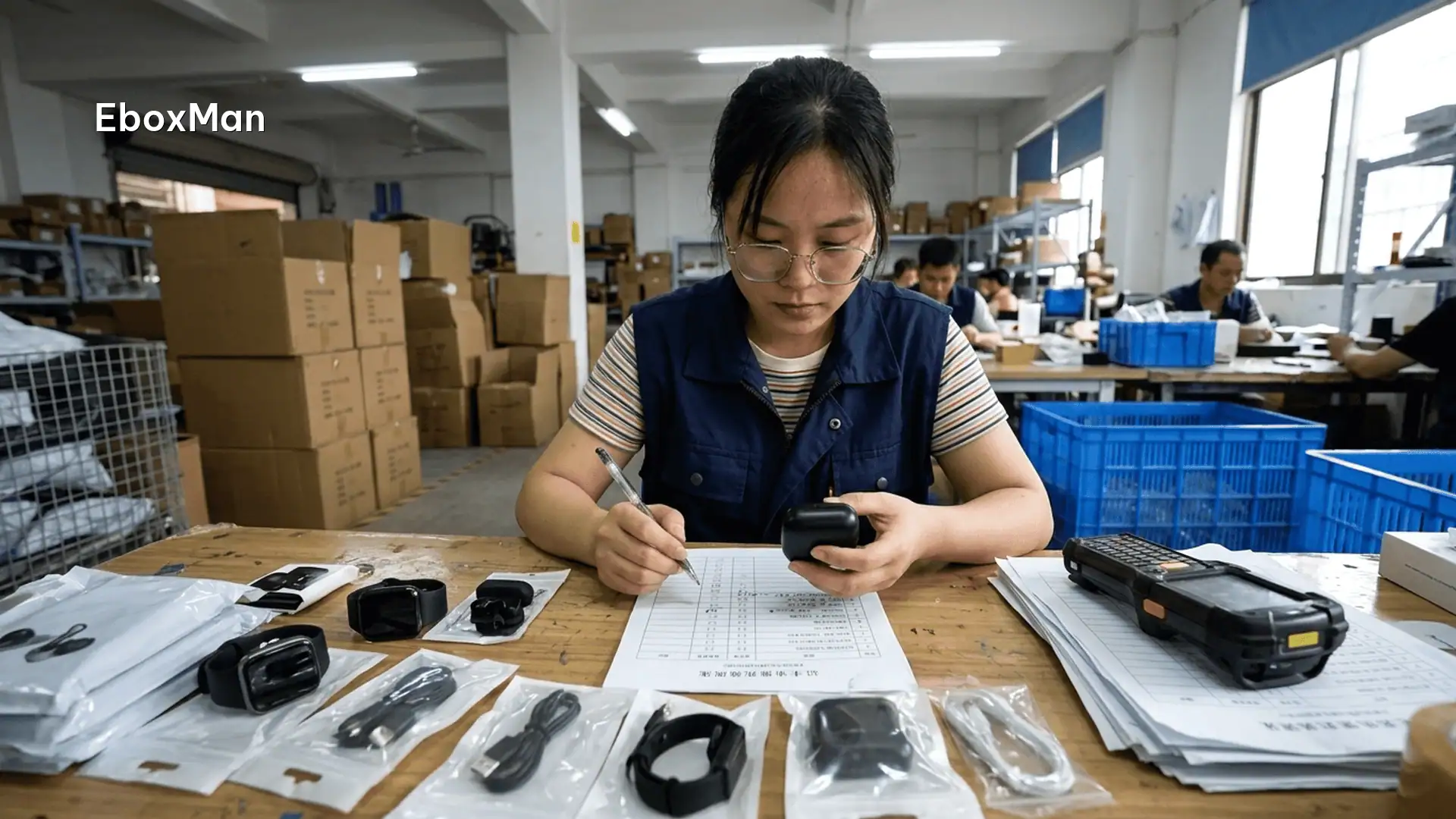
- Get your sourcing agent to state the HS code and country of origin on the commercial invoice, in writing, before the first shipment goes out.
If your invoices from your current supplier don’t list a code and country of origin at all, that’s a red flag. It means nobody has done the classification, and customs will do it for you at the border — usually to your disadvantage.
The duty formula: how customs actually calculates what you owe
Base import duty is calculated as a percentage of the declared customs value — not your retail price, and not what the customer paid at checkout. Customs value typically means the price paid to the factory, plus freight and insurance depending on the valuation method.
The basic formula:
Duty owed = Customs value × duty rate
The duty rate itself is rarely just one number anymore. For goods manufactured in China, you’re usually stacking multiple layers on top of the base HTS rate: the general MFN duty rate, Section 301 tariffs, and in many current cases, additional country-specific duties under IEEPA or Section 122 authority. Ignore any of those layers and your calculation of import duties will be off by a wide margin.
Worked example: a $6.50 silicone kitchen tool, landed in the US
Take a real category: a silicone kitchen utensil set, HTS code 3924.10.4000, manufactured in China, declared customs value $6.50 per unit.
| Duty component | Rate | Amount on $6.50 unit |
|---|---|---|
| Base MFN duty rate | 3.4% | $0.22 |
| Section 301 (List 3, China) | 25% | $1.63 |
| Additional IEEPA duty (country-specific) | 20% | $1.30 |
| Total effective duty rate | 48.4% | $3.15 |
That $3.15 is real money on a $6.50 unit — nearly half its landed cost before you’ve paid for freight, brokerage, or the box it ships in. Multiply that across a container of 5,000 units and it’s the difference between a profitable SKU and a loss leader. Rates and country-specific figures shift with policy changes, so always verify the current tariff rate for your exact HTS code before you commit to a shipment — this example illustrates how to calculate duties correctly, not a fixed rate you should copy for a different product.
Section 301, Section 122, and IEEPA: why the base rate is never the whole story
These three names show up constantly in customs paperwork and rarely get explained in plain language:
- Section 301 — additional tariffs applied to specific product categories originating in China, organized into lists, some as low as 7.5% and others as high as 25%.
- Section 122 — a broader, country-of-origin-based duty authority the US has used for balance-of-trade actions; when active, it applies on top of existing rates rather than replacing them.
- IEEPA — emergency tariff authority used for country-specific actions outside the normal trade process, often adjusted with little notice.
None of these appear on the six-digit HS code itself. They’re layered on based on country of origin at the time of import, which is why the same product can cost more to import this quarter than it did last quarter, with zero change to the product or the classification.
DDU, checkout collection, or DDP: how the same shipment costs you differently
Once you know the real duty rate, you have three ways to handle taxes and duties, and they produce very different customer experiences for the same shipment.
| Method | Who pays, and when | Customer experience | Refusal risk |
|---|---|---|---|
| DDU (duties unpaid) | Customer, at delivery, to the courier or Canada Post | Surprise bill at the door | High |
| Checkout duty and tax collection (Shopify Managed Markets, third-party calculator apps) | Customer, upfront, at checkout | Better, but only accurate if the HS code and country of origin are mapped correctly per product | Low if configured correctly, high if not |
| DDP (duty pre-paid via sourcing agent) | Seller, built into landed unit cost before the sale | No bill at delivery, ever | Near zero |
Shopify’s own duty and tax tools can collect duties and taxes at checkout reasonably well if every product has a correct HS code and country of origin attached in your product settings. The gap is that most sellers never fill that field in accurately, so the checkout calculator either shows $0 or a wrong number — which is worse than not showing one at all, because it looks like a promise you then break at delivery.
Checklist: set up accurate duty math for your Shopify store
- Get the correct HTS/HS code for every SKU in writing from your supplier or agent, not a guess from a forum.
- Confirm country of origin per product, not per supplier — origin can differ even within one factory’s catalog.
- Calculate the full stacked duty rate: base rate plus Section 301, plus any active IEEPA or Section 122 duty for that origin.
- Decide whether you’re shipping DDU, using a checkout calculator, or moving to DDP — and price your product accordingly.
- If using Shopify’s built-in duty and tax collection, enter the HS code and country of origin fields for every product, not just your top sellers.
- Re-check rates quarterly — Section 301 and IEEPA additions change with policy, and an outdated calculation is as bad as no calculation.
When this does not apply to you
If you’re print-on-demand, sourcing from a US-based warehouse, or testing a single product with no committed inventory, this level of duty calculation may not be worth your time yet — CJdropshipping and Zendrop are both reasonable for that early testing stage, since they let you sample without upfront classification work or MOQ. EPROLO’s print-on-demand catalog has a similar advantage for low-volume, no-inventory testing. This article is for sellers who are past the testing stage and importing real inventory volume, where a 48% miscalculation on landed cost is the difference between a working margin and a loss.
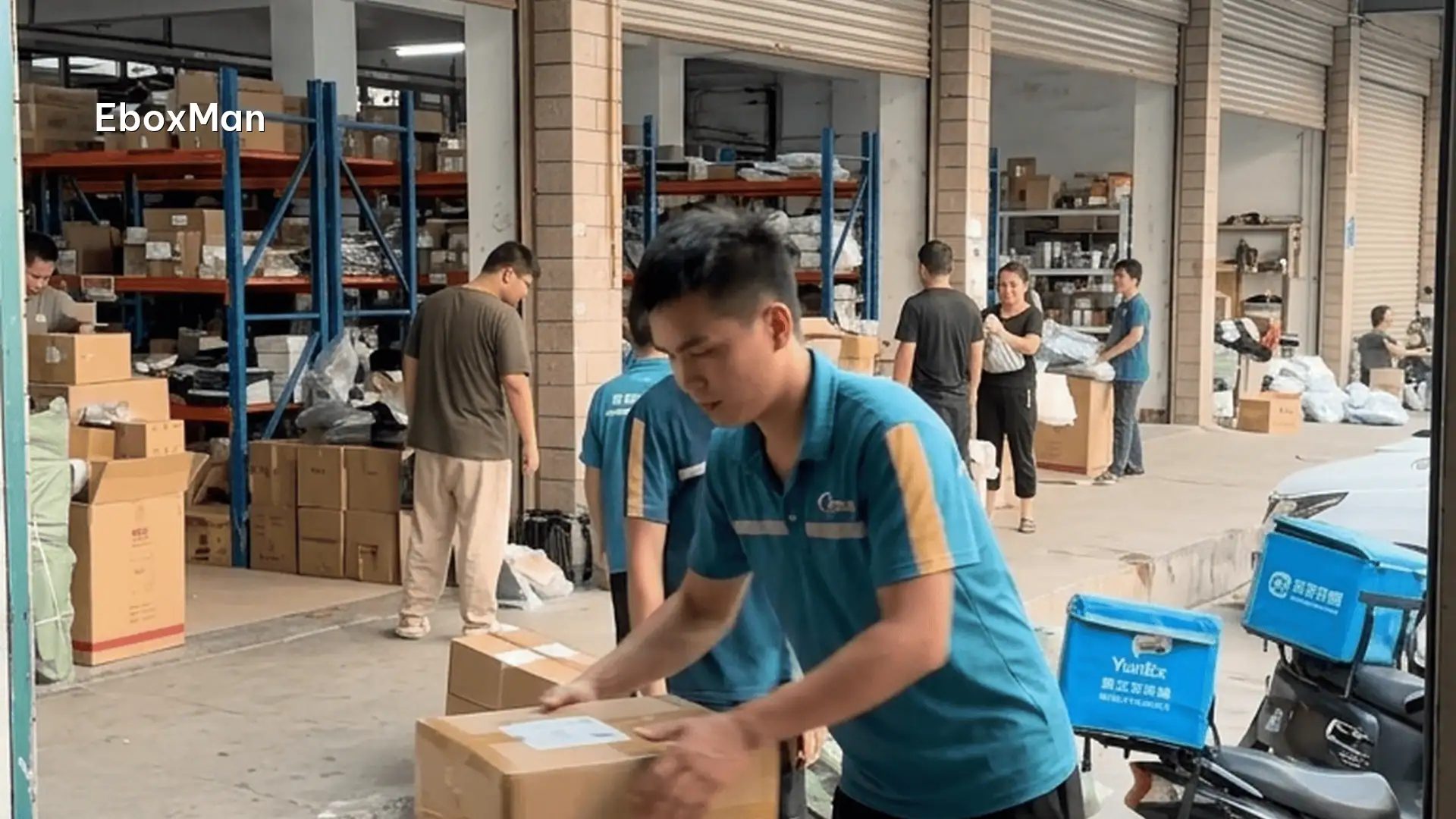
EboxMan handles the classification, the country of origin documentation, and the duty stacking on the sourcing and shipment side, then ships DDP with Section 301 and Section 122 duties already included in your quote — so the number you see is the number you pay, and your customer never sees a bill at the door. Get a free, tariff-inclusive sourcing quote and we’ll reply within 24 hours with the real landed cost for your product.
Private Agent for Dropshipping Success