
In short: for an ecommerce business, delivery time is part of the product. A shipping delay never stays a logistics problem — it turns into refunds, chargebacks, a falling feedback score, and dead repeat sales. And it usually starts upstream, in how a supplier runs their whole process. Speed is not a feature you buy. It is the output of a smooth chain.
What a shipping delay actually costs
Say delivery time slips from 8 days to 18. Every delayed shipment sets off the same chain reaction, in the order it hits your store:
- Support load explodes. “Where is my order?” messages start around day 10. Every one takes time you planned to spend on growth.
- Refunds and chargebacks begin. Some customers will not wait. A chargeback costs the product, the shipping, a fee — and a mark against your store.
- Your feedback score drops. Meta scores your store from real buyer surveys. Below 2, your ads get penalized and every click costs more. Slow delivery is the #1 driver. (We wrote a full guide on the Facebook feedback score.)
- Repeat sales die quietly. Customer satisfaction has a memory: a buyer who waited 18 days rarely comes back — and repeat buyers are where real margin lives.
So an “extra week” of delivery is never just a week. It is money leaving through four doors at once.

Where slow shipping really comes from
1. Cheap routes that avoid formal customs
Some carriers and routes are cheap because they cut corners on clearance. Since de minimis ended, a parcel that does not clear US customs formally gets stuck in transit, checked, or seized — and your tracking goes dark. One disruption at the border can hold a whole consolidation. The discount was never free. (More here: the risks of fake shipping labels.)
2. Offers that hide their cost in the route
We wrote recently about suppliers who compete with upfront credit lines. Financing costs real money, and that cost hides somewhere — very often in a slower, riskier shipping route. If the headline of an offer is “pay later,” the fine print is often “arrive later.” The credit smooths your cash for 30 days; the slow route damages your store for much longer.
3. Nobody owns the handoffs
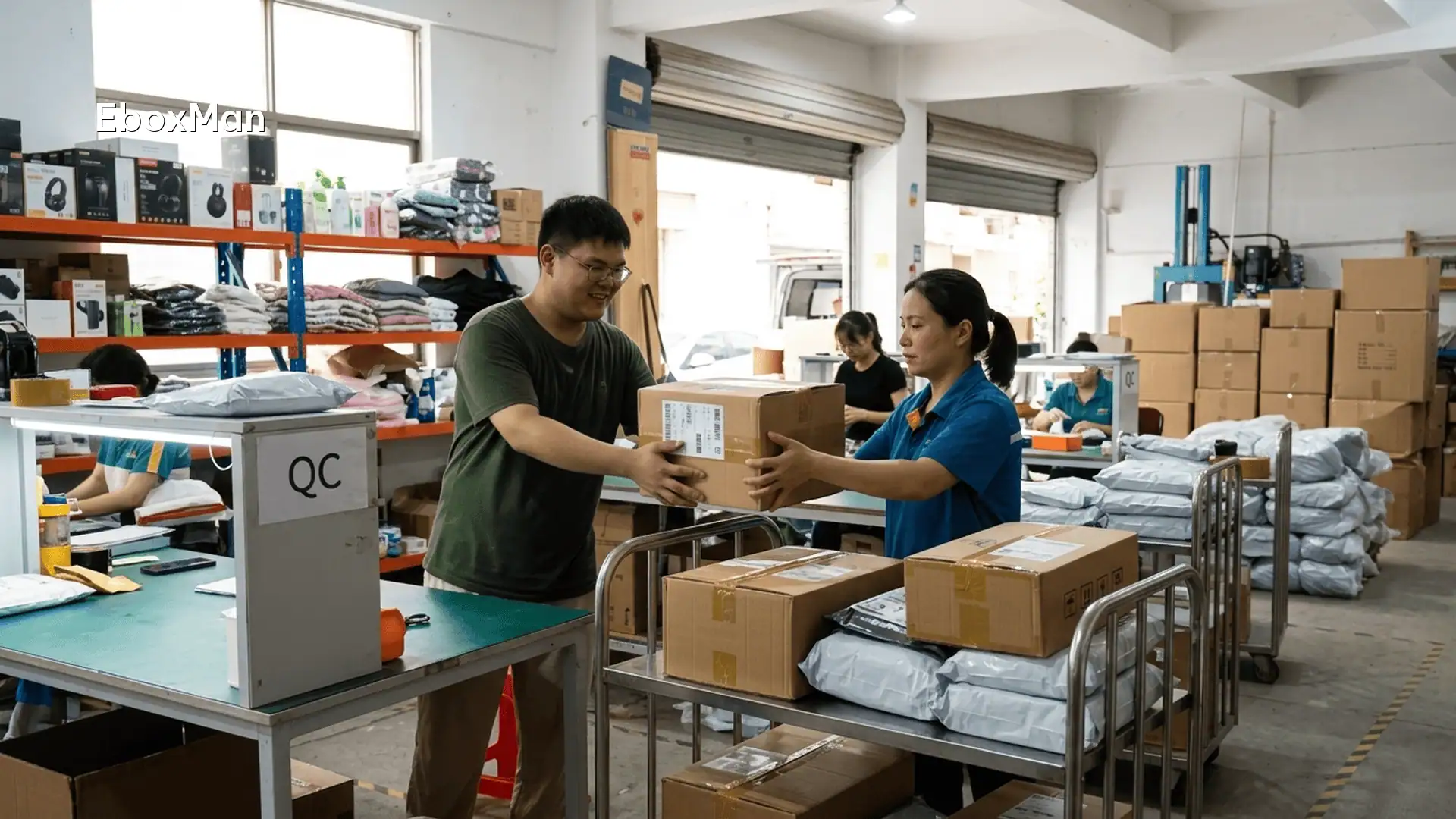
This is the biggest one, and the least visible. An order travels through many hands: factory → warehouse → QC → line-haul → customs → last mile. Delay rarely lives inside one step. It lives between steps — a batch waiting two days for inspection, paperwork waiting for someone to file it, a parcel waiting for a truck that left yesterday.
That gap between steps is the real bottleneck of most shipping processes. A supplier can be genuinely strong at one step and still deliver slowly, because nobody owns the gaps.
Speed is a process, not a feature
This is the part we care about most. When a supplier advertises one strength — the cheapest price, the biggest credit line, even “fast shipping” itself — ask what the rest of the chain looks like. One strong step cannot carry a rough chain. A smooth chain does not need a hero step.
Here is what a smooth chain looks like in practice:
- Quote in 24 hours — so testing a product does not stall for a week.
- Sample before batch — problems get caught when they are cheap to fix.
- Photo QC on every batch — defects rejected at the factory, not refunded in Ohio.
- Formal customs clearance — duties in the price, parcels that never sit in a gray zone.
- Tracking that activates fast and updates in real time — and a person who tells you proactively when a shipment stalls, before your customer asks.
- Every handoff has an owner — the same dedicated agent watches your orders across all steps.
None of these is impressive alone. Together, they are why parcels arrive on time — and why our average US delivery holds around 8 days without any single “secret weapon.”
If a delay happens anyway: protect the store
Even the best supply chain has bad weeks — carrier issues, customs spot checks, weather. What separates stores that survive a delayed shipment from stores that bleed is how the delay is handled:
- Tell customers before they ask. A proactive shipping notification (“your order is delayed about 3 days, here is the new estimate”) cuts refund requests dramatically. Silence is what creates chargebacks.
- Keep delivery estimates honest on the product page. Promising 5 days and delivering in 12 hurts far more than promising 8–12 and delivering in 10.
- Give buyers real order tracking. A tracking page that actually updates keeps “where is my order” emails out of your inbox.
- Pre-stock your bestsellers. For proven products, holding buffer inventory at the fulfillment center turns a supply chain disruption into a non-event for your customers.
Notice the pattern: every one of these is process, not heroics. A supplier whose workflow includes proactive updates and honest estimates protects your store on the bad weeks too.
How to test a supplier’s process before peak season
- Run one small test order and watch the handoffs. When does tracking activate? When does it first move? Who tells you — them or you?
- Ask who owns each step. If the answer is “different departments,” ask who you message when a parcel stalls between two of them.
- Ask what happens when a batch fails QC. A real process has an answer with steps in it. A sales pitch has a promise.
- Ask for p90 delivery time, not the average. The average hides the slow tail — and the slow tail is where the chargebacks live.
Frequently Asked Questions
How does slow shipping affect an online store?
It raises refunds and chargebacks, lowers your ad platform feedback score so every click costs more, and kills repeat purchases. The total damage usually costs more than faster shipping would have.
Why do cheap shipping routes take longer?
Many cheap routes avoid formal customs clearance. Since de minimis ended, those parcels get stuck, checked, or seized, and tracking goes dark. The discount is paid back in delays.
What delivery time should I expect from China to the US?
On formally cleared DDP lines, about 6 to 12 days door-to-door is realistic, with roughly 8 days as a healthy average. Ask any supplier for their p90 delivery time, not just the average.
Is a supplier credit line worth slower delivery?
Rarely. Credit smooths your cash for about 30 days, while slow delivery damages your reviews, your ad costs, and your repeat sales for much longer. Test the whole process with one small order first.
The chain is the product
Your customer never compares suppliers the way a retailer does. They see one thing: the parcel arrived when promised, or it did not. That outcome is built by a process — quiet, boring, owned at every step.
If your current delivery times are drifting, or an offer you are looking at sounds too good on one axis, send us one product link. You will get a landed-cost quote in 24 hours, and you can test the whole chain with one small order — which is the only test that matters.
Private Agent for Dropshipping Success