
A customer orders a $28 phone case. Three days before it arrives, a courier invoice shows up for $14 in duties and a handling fee. The customer didn’t budget for that, doesn’t recognize the charge, and calls their bank instead of you. That’s not a returns problem. That’s a chargeback problem, and it’s one of the fastest-growing dispute categories we see among dropshippers right now.
The keyword sellers are searching for — customs fees chargeback dropshipping — exists because this pattern is common enough to have a name. This article breaks down why it happens, what it costs you beyond the refund, and how shipping DDP (duties paid before delivery) removes the trigger entirely.
The moment a customs bill becomes a dispute
Here’s the mechanic, step by step. A seller ships DDU (delivered duty unpaid) because it looks cheaper on paper. The parcel clears customs, but the duty hasn’t been paid — so the carrier collects it from the recipient at delivery, or mails a separate invoice a few days later. The buyer never saw this fee at checkout. From their point of view, they paid you in full, and now a stranger is asking for more money to release “their” package.
Most buyers don’t call the courier. They open their banking app, tap “dispute this charge,” and select a reason like “item not as described” or “unauthorized transaction.” Neither is technically accurate, but it doesn’t matter — the bank sides with the cardholder by default, and you’re now fighting a chargeback with weak evidence, because the actual problem (an unpaid import fee) isn’t something your order confirmation email ever mentioned.
Why chargebacks, refunds, and Stripe risk are not the same fight
A refund costs you the product and the payment processing fee. A chargeback costs more: the refund amount, a dispute fee from your processor (commonly $15–$25 per case regardless of outcome), and a mark against your account health. Payment platforms including Stripe track dispute ratios as a fraud prevention signal — cross roughly 0.75%–1% of transactions disputed, and you can be moved into a higher-risk category, with reserves held or processing paused while you sort it out. A handful of surprise-fee disputes in a single week from one supplier batch can trip that threshold on a small store faster than sellers expect, and once a Stripe flag lands, it tends to stay on file longer than the dispute itself.
This is the part that gets missed: the underlying import duty was never optional. Every parcel entering the US from China needs a customs entry with duties paid, because the $800 de minimis exemption was suspended for all countries in August 2025. Section 301 duties apply to most China-origin categories at rates that vary by product, and the wider duty stack has kept moving — the flat 10% Section 122 surcharge that replaced the struck-down IEEPA tariffs in February 2026 expired on July 24, 2026, with new Section 301 duties taking over the same day. Sellers who don’t build this import cost into their landed cost from the start are the ones who end up passing the bill to the customer’s doorstep — and the customer’s doorstep is exactly where trust breaks.
If you want the full breakdown of how these rates stack and how to calculate your true landed cost per SKU, we’ve laid it out here: Section 301, Section 122, and landed cost in 2026.
DDP vs. DDU: where the fee actually lands
The difference between these two shipping terms is the difference between a predictable price and a surprise invoice. We’ve written a longer comparison of the two models here, but the short version for this article is below.
| Factor | DDU (duty unpaid) | DDP (duty paid) |
|---|---|---|
| Who pays the import duty | Customer, at or after delivery | Included in the unit price you already charged |
| Customer sees a second bill | Yes — often unexpected | No |
| Typical dispute trigger | “Unauthorized charge” or refused parcel | None related to customs |
| Clearance method | Varies, sometimes informal or delayed | Formal entry on carrier lines built for it |
| Seller’s landed cost visibility | Fuzzy until the fee posts | Known before you set your retail price |
What this looks like across real order volume
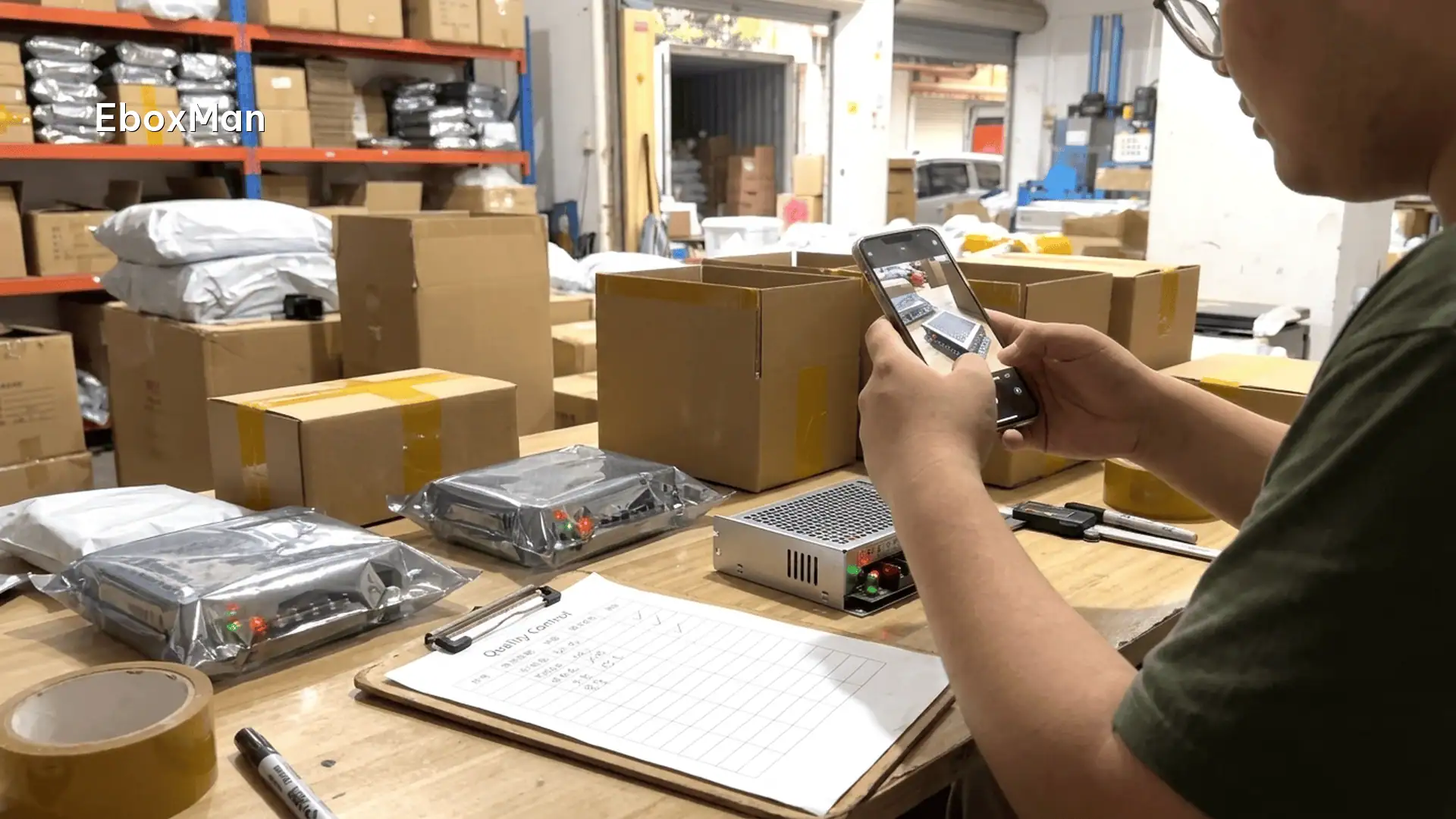
Across the orders we pack every day, the pattern repeats in a predictable way: sellers and dropshippers running mixed DDU shipments on general goods report refund-and-dispute rates in the 9%–12% range once a Section 301-eligible category takes off in volume, mostly tied to unpaid-duty parcels sitting at a local depot. One apparel seller we work with moved three of their top SKUs from a DDU lane to DDP shipping. Delivery times settled at the fast end of the standard 8–15 day window, landed cost per unit became a fixed number instead of an estimate, and the dispute-and-refund rate on those SKUs dropped to roughly 2%–3% within two shipping cycles — mostly ordinary sizing or preference returns, not customs surprises. Nothing changed about the product. What changed was that the customer never got a second bill.
How to check your own import exposure before it becomes a dispute
You don’t need a broker to get a rough number — the full working is in our landed cost formula guide. Here’s the checklist we walk new sellers through:
- Find your product’s HTS (Harmonized Tariff Schedule) code using the official USITC or CBP lookup tool — search by product description, not category guesswork. Our HTS code and import duty guide walks through the steps.
- Confirm the current Section 301 rate for your product — rates vary by product category and have changed more than once since 2025 — and check which other trade-action duties apply to your category today.
- Add the applicable rates to your unit cost, not your retail price — duty is calculated on the customs value of the goods, usually the invoice or wholesale value your supplier quotes.
- Add realistic freight and any insurance cost per unit based on your actual order volume, not a single-parcel quote.
- Compare that total landed cost against your current retail price to see your real margin, not the margin you assumed at checkout.
- Decide whether you’re shipping DDP (fee absorbed, one clean price) or DDU (fee passed downstream, dispute risk downstream too).
- If a number surprises you, that’s the number your customer would have been surprised by too — fix it before launch, not after a chargeback.
The honest math on agent margin vs. dispute cost
Sellers reasonably ask whether paying a sourcing agent for DDP shipping just moves the cost around instead of saving it. Run the numbers instead of guessing: a single chargeback commonly costs you the refunded amount plus a $15–$25 dispute fee plus the lost product, and a cluster of them risks a processor review that can freeze payouts for days. Consolidated DDP shipping folds the current Section 301 duties into one unit price and removes the second bill entirely, and QC photos taken before a batch ships cut down on defect-driven refunds separately. For most sellers and dropshippers moving real volume, the reduction in disputes and refund processing fees offsets the agent margin within a normal month, not a hypothetical one.
If you want the tariff-inclusive number for your exact SKU, send it through our quote form — we reply within 24 hours: get your sourcing quote.
When DDP is not the right call
This isn’t a fit for every seller, and pretending otherwise wouldn’t be honest. If you’re testing a product at under 10 orders a day, a marketplace platform or a shared-warehouse supplier can be the faster, lower-friction way to validate demand before you commit to a dedicated shipping lane — the volume isn’t there yet to justify optimizing landed cost down to the cent. Sample orders and small test batches fall into the same category: get the product in your own hands first, confirm it sells, then formalize the supply chain around it. A private sourcing agent earns its keep once you’re past that stage and the per-order dispute risk starts compounding at scale.
What we actually do differently
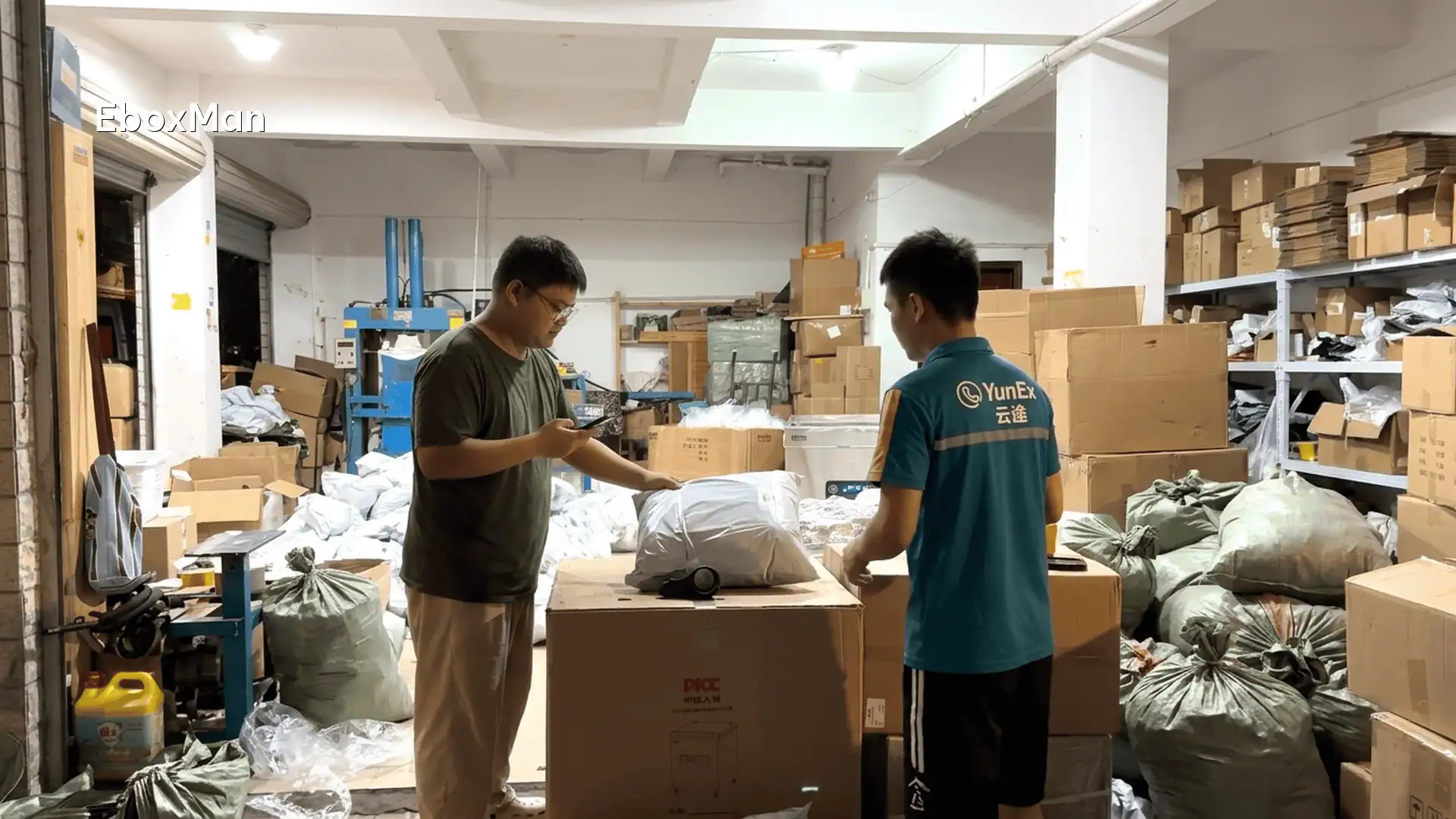
We don’t file your customs entry as your broker of record, and we don’t claim to assign your HTS code for you — that’s a licensed customs broker’s job for edge cases, and we’ll say so plainly when a product needs one. What we do: ship on carrier lines that clear US customs formally, with Section 301 and Section 122 duties already built into one unit price, so nothing lands on your customer’s doorstep after checkout. Every batch gets photo and video QC at our facility before it ships, defects get rejected at the factory, custom packaging and labeling requests are handled per SKU, and if something is lost or damaged in transit, our reshipment and refund policy covers it. You get one dedicated agent working with you 1:1 through the EboxMan app, not a support queue, and a quote back within 24 hours on any volume, sample orders included.
Since 2019, that model has shipped daily order volume across US, UK, EU, AU, and CA stores, and it’s part of why our Shopify App Store rating sits at 5.0. None of that replaces good product-market fit or clean fulfillment — it just removes the customs surprise as a variable in your dispute rate.
Put a real number on it
A surprise customs fee is a solvable problem, not a cost of doing business. If your current supplier ships DDU and you’re seeing dispute or refund rates creep up on your best-selling categories, the fix isn’t more customer service — it’s removing the second bill before it’s ever sent. Send us your SKU, order volume, and destination country through our free sourcing quote form, and we’ll come back within 24 hours with one tariff-inclusive number: duties paid, DDP shipping, no contract required to see it.
Private Agent for Dropshipping Success