
Most WooCommerce sellers searching for the best WooCommerce dropshipping plugin are hoping it will solve sourcing, shipping, and customer service in one click. What it actually solves is a product feed. It does not fix defect rates, it does not fix an 18-day shipment that should have taken 8, and it does not stop a customs bill from landing on your customer’s doorstep after checkout.
The EboxMan plugin connects your WooCommerce store to a sourcing and fulfillment operation that has run since 2019, processing 10,000+ orders a day. Products sync, orders sync, invoices sync, and shipments move DDP with Section 301 and Section 122 duties already paid before your customer ever sees a bill. This guide walks through setup and the daily workflow, honestly, including where this model is not the right fit.
Key takeaways
- 2-3 days processing after payment, 6-12 days door to door, averaging about 8 days to the US.
- One dedicated named agent per store, quote replies within 24 hours (48 hours max).
- DDP shipping means Section 301 and Section 122 duties are baked into one per-unit price, nothing collected at delivery.
- Every batch gets photo and video QC before it ships, defects get rejected at the factory, not returned by the customer.
- No minimum order, no monthly fee, no contract, sample orders welcome before you commit.
Why a WooCommerce dropshipping plugin needs to do more than sync a catalog
Free catalog apps are genuinely useful if you are testing a product idea with no budget. They give WooCommerce users thousands of dropshipping products to browse and a one-click import product button, and that is a real strength worth acknowledging.
The gap shows up after the first order ships. de minimis is gone for China-to-US parcels, so every shipment now needs a formal customs entry, and a plugin that only pulls product data has nothing to say about who pays the duty or how long clearance takes. We break down what that shift actually costs per unit in our landed cost guide.
A catalog plugin tells you what to sell. A fulfillment plugin tells you whether it will arrive intact, on time, and without a surprise bill.
Setting up the EboxMan plugin on your WooCommerce store
Step 1: install and connect
Install the EboxMan plugin from your WordPress dashboard like any other WooCommerce plugin, then link it to your free account at app.eboxman.com. The connection pulls your store’s order feed into the app so nothing has to be entered twice.
Step 2: import products
Search or submit a sourcing request inside the app, then import product listings, images, and pricing straight to your dropshipping store with one click. If you already know the factory or product you want, you can send a photo or link and get a sourcing quote back within 24 hours.
Step 3: set supplier and shipping preferences
Assign which supplier fulfills which product line, choose DDP shipping by default, and set your invoice and packaging preferences once. Custom packaging and private label are available once a product line hits volume, though we do not quote MOQ numbers until we see the item.
Watch out: connecting a plugin does not replace checking your own HTS code for duty-sensitive categories. It is worth ten minutes with the US HTS lookup tool, or a licensed customs broker for anything borderline.
The daily order workflow, from checkout to delivery
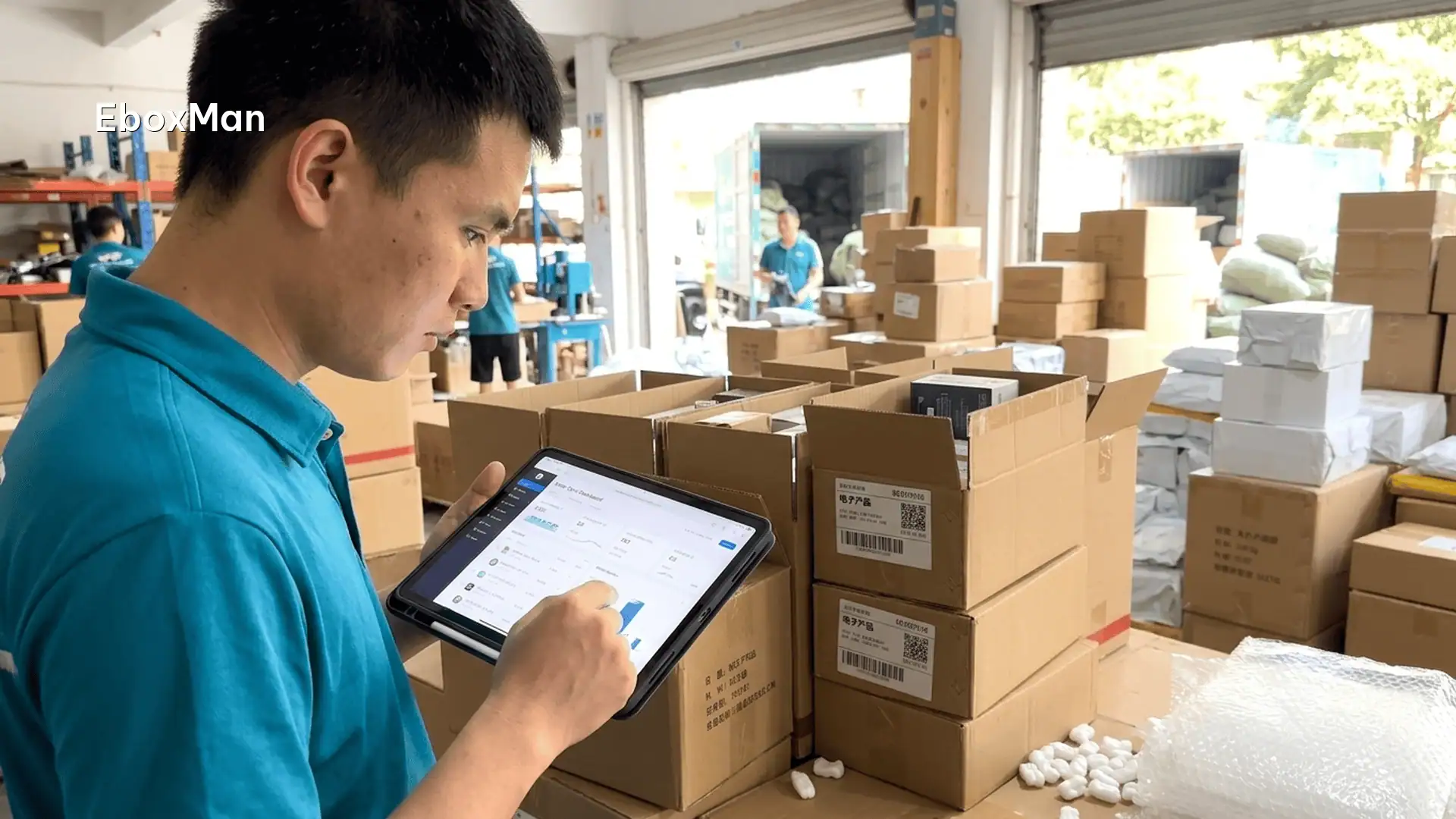
A customer checks out on your WooCommerce store, the order syncs to the app in real time, and our team sources, packs, and photographs the item before it ships. That sequence is the same whether it is order 1 or order 10,000 that day.
Shipping runs through YunExpress and Yanwen with real, trackable labels, and tracking numbers sync back to your store automatically. Across the orders we pack every day, the pattern we keep seeing is that sellers who check tracking sync weekly catch shipping problems before a customer files a chargeback, not after.
The order that syncs automatically is the order your support inbox never hears about.
Sourcing dropshipping products across multiple suppliers
Running a real dropshipping business almost always means working with multiple suppliers, not one factory for everything. A single sourcing agent who coordinates across those factories saves you from chasing five separate WeChat threads for one order. That is the role our team plays, and we explain the model in more depth in our sourcing agent guide.
Local suppliers in your home market can still make sense for bulky or fast-moving items where shipping time matters more than unit cost. For most WooCommerce dropshipping products, factory-direct China sourcing wins on price once QC and duties are handled correctly.
Pro tip: order a paid sample before you list any dropshipping supplier’s product. It costs a few dollars and tells you more about QC than any product photo ever will.
Landed cost and DDP: the number that actually matters
Section 301 adds 25 percent duty on most goods and 7.5 percent on List 4A items, and the separate Section 122 surcharge adds another 15 percent on top of that for many China-origin shipments. IEEPA-related orders can layer on further adjustments depending on the product category.
Shipping DDP means those duties are already paid and folded into one per-unit price before the parcel leaves China, so nothing gets collected at your customer’s door. We cover the mechanics of DDP versus DDU in detail in our DDP vs DDU comparison.
| Shipping term | Who pays duty | Customer surprise risk | Typical delivery |
|---|---|---|---|
| DDU / marketplace shipping | Customer, at delivery | High | 10-25 days |
| Unqualified low-cost line | Unpredictable, seizure risk | High | Variable, tracking gaps |
| EboxMan DDP | Included in per-unit price | None | 6-12 days, ~8 avg US |
If you want the tariff-inclusive number for your exact SKU, send it through our quote form, we reply within 24 hours.
A pattern we see: what changes when QC moves before shipping
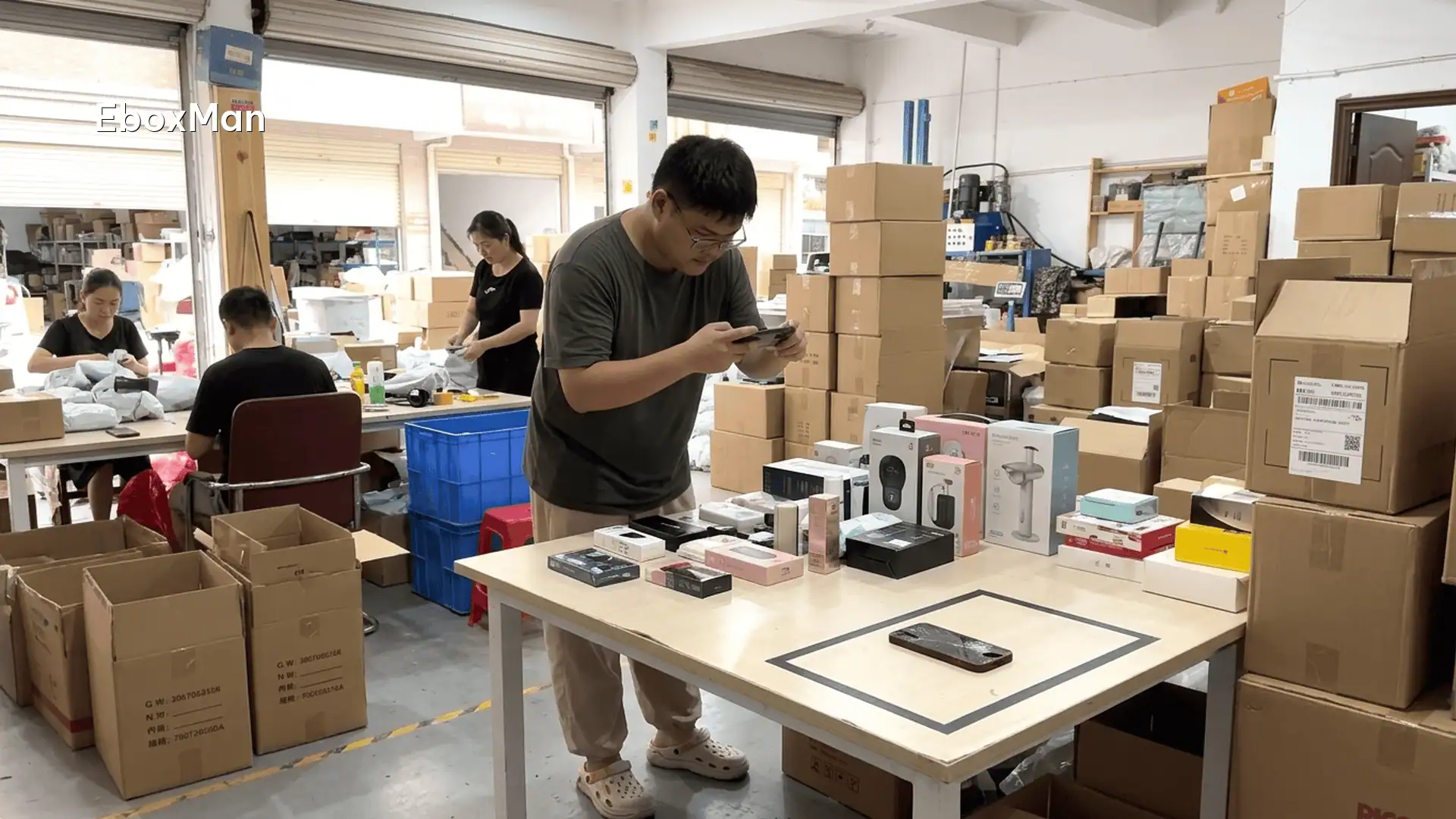
A mid-size WooCommerce store selling home goods was running 60-80 orders a day through a shared-warehouse supplier, with defect-related returns sitting around 6-9 percent and customers occasionally billed on delivery. After moving fulfillment to a photo-QC workflow with DDP shipping, defect returns dropped to roughly 1-2 percent and landed cost per unit stabilized because duties stopped varying shipment to shipment.
Delivery time moved from an inconsistent 12-20 days to a steadier 7-9 days. None of this required a bigger catalog, it required someone checking the product before it left the building.
When this plugin is not the right fit
If your WooCommerce store is doing under 10 orders a day, a marketplace platform’s built-in payment protection and huge product range often beats a dedicated agent relationship, at least until volume proves the product. Sample orders are the honest way to find out before committing either way.
The sweet spot for a plugin like this is roughly 50-500 orders a day, where sourcing consistency and duty predictability start outweighing the flexibility of free catalog tools.
- Confirm your monthly order volume before comparing plugin cost against agent margin.
- Order a sample and check it against the listing photos.
- Look up the HTS code for your product category and estimate Section 301 and Section 122 exposure.
- Ask your candidate agent whether shipping is DDP or DDU, in writing.
- Check tracking sync and QC photo policy before your first bulk order.
Frequently asked questions
Is the EboxMan plugin free to install?
Yes, there is no monthly fee or contract to connect the plugin and get a sourcing quote. You pay per order, and sample orders are supported with no minimum.
Does EboxMan handle customs clearance for me?
Shipments move on shipping lines that clear US customs formally, with duties paid before delivery and included in your per-unit price. For complex classification questions, a licensed customs broker is the right resource, not a plugin.
Can I use multiple suppliers with one WooCommerce plugin?
Yes, most stores run several suppliers across product lines, and the app coordinates sourcing, invoicing, and tracking under one dashboard so you are not managing each factory separately.
What’s the best WooCommerce dropshipping setup for a growing store?
There is no single best WooCommerce dropshipping setup for every seller. Stores under 10 orders a day usually do fine with free catalog tools, while stores in the 50-500 order range tend to need a named agent, DDP shipping, and photo QC to keep defect rates and delivery times predictable.
How fast does an order ship after checkout?
Processing takes 2-3 days after payment, and door-to-door shipping runs 6-12 days, averaging around 8 days to the US.
If you are weighing a WooCommerce dropshipping plugin against your current setup, the fastest way to see the real numbers is to send us one SKU. We will quote a single DDP price, duties included, and reply within 24 hours.
Private Agent for Dropshipping Success